
AI | FemTech
Allie
9 Weeks
About the Project
In an era where 84% of women actively track their health, a significant paradox exists: despite abundant data, 52% feel frustrated by generic advice, and over 50% distrust how their personal health data is used. This project addresses the critical disconnect in women's health, where fragmented data from wearables, apps, and healthcare records leaves users feeling isolated, anxious, and misunderstood.
My Role
I was responsible for the end-to-end UX and Service Design, from conducting foundational research and synthesising insights to developing concepts, validating solutions through testing, and designing the final user interface.
Goal
The goal is to provide timely, personalised, and emotionally supportive insights, empowering women with a clear, unified health narrative by leveraging ethical AI and human-centred design.
Estimated Outcomes
Based on our user validation, the current landscape of women's health tracking, and the strategic alignment with NHS priorities:
20%
Increase in women feeling confident and prepared to discuss their health with a GP
25%
Challenge
How might we design a health companion that builds trust, respects personal data, and delivers insights that feel timely, relevant, and emotionally supportive?
The Process: An Iterative, Human-Centred Journey
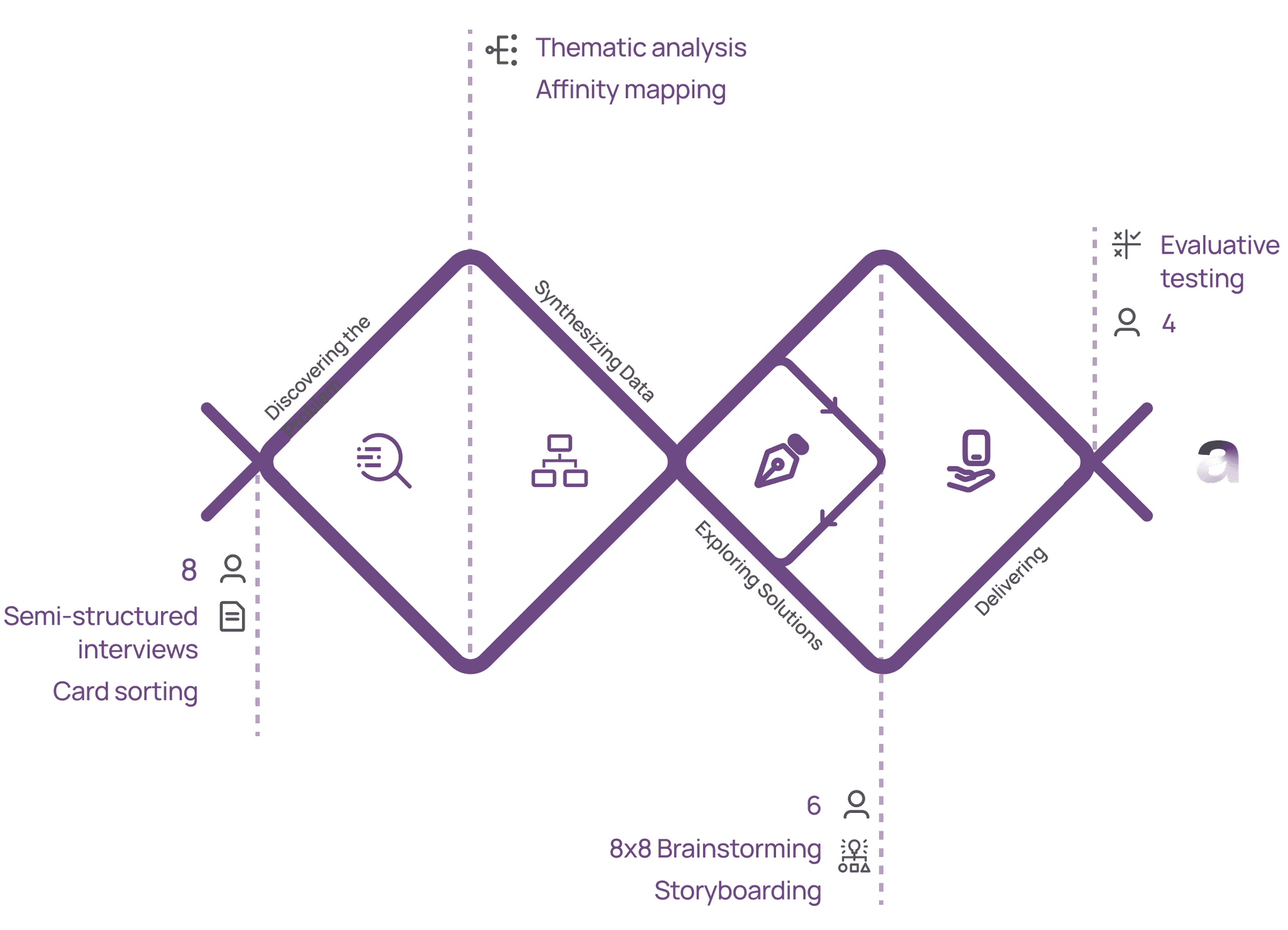
The Double Diamond approach
My design journey for Allie followed the Double Diamond framework, an iterative and evidence-based approach that ensured every decision was grounded in user needs and validated by insights. This process allowed me to systematically navigate from a broad problem space to a focused, meaningful solution.
Discover: Uncovering the Truth
Methods:
Starting with a comprehensive literature review to establish the current connected health landscape, my next step involved a mixed-methods approach designed to unearth nuanced user perspectives. I engaged with 8 participants from varying cultural backgrounds and with different health tech usage habits. My methods included semi-structured interviews and card sorting, intentionally weaving in user storytelling to explore how women actively engage with and perceive their health tracking experiences.
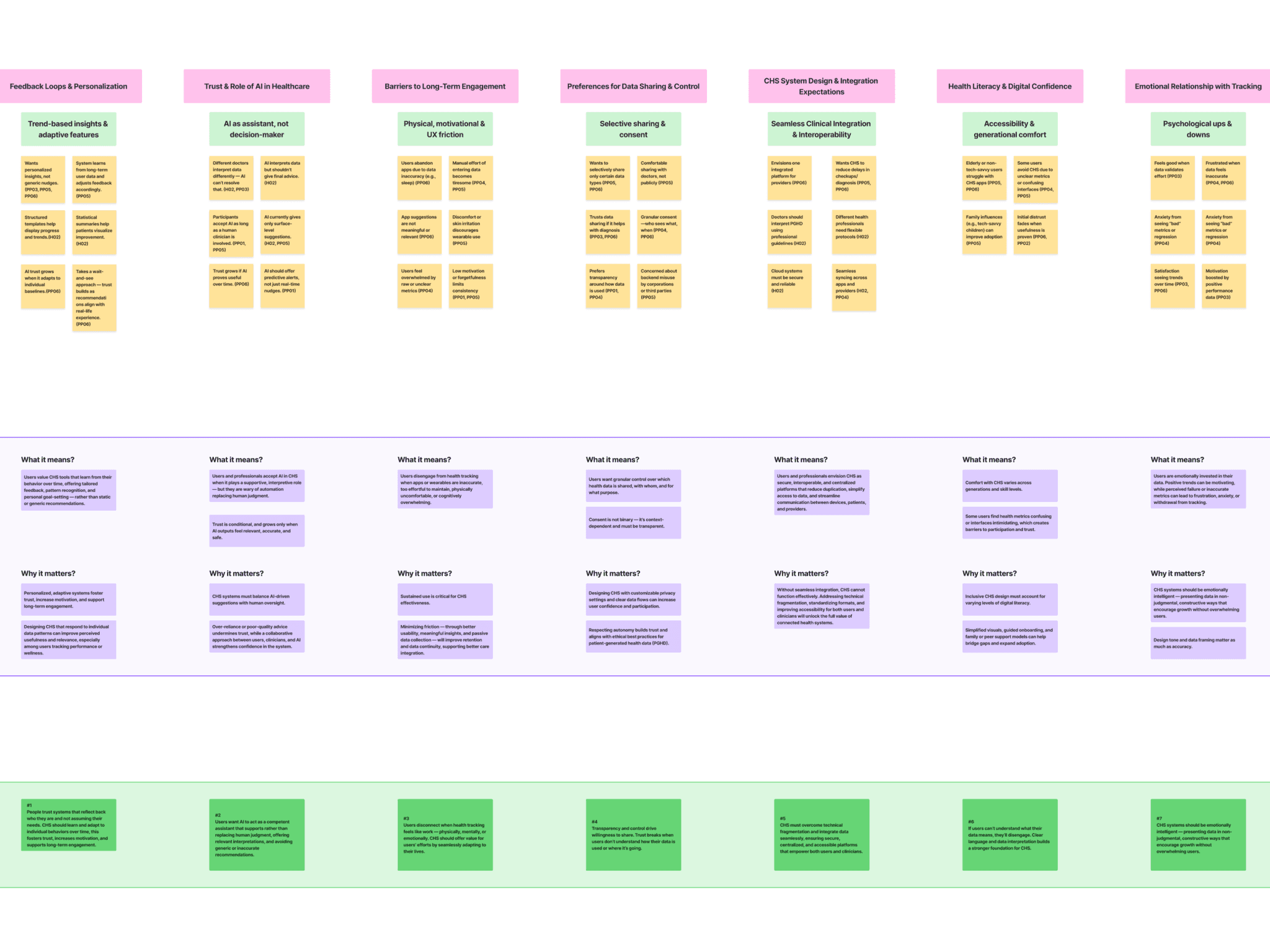
Thematic analysis for synthesising insights
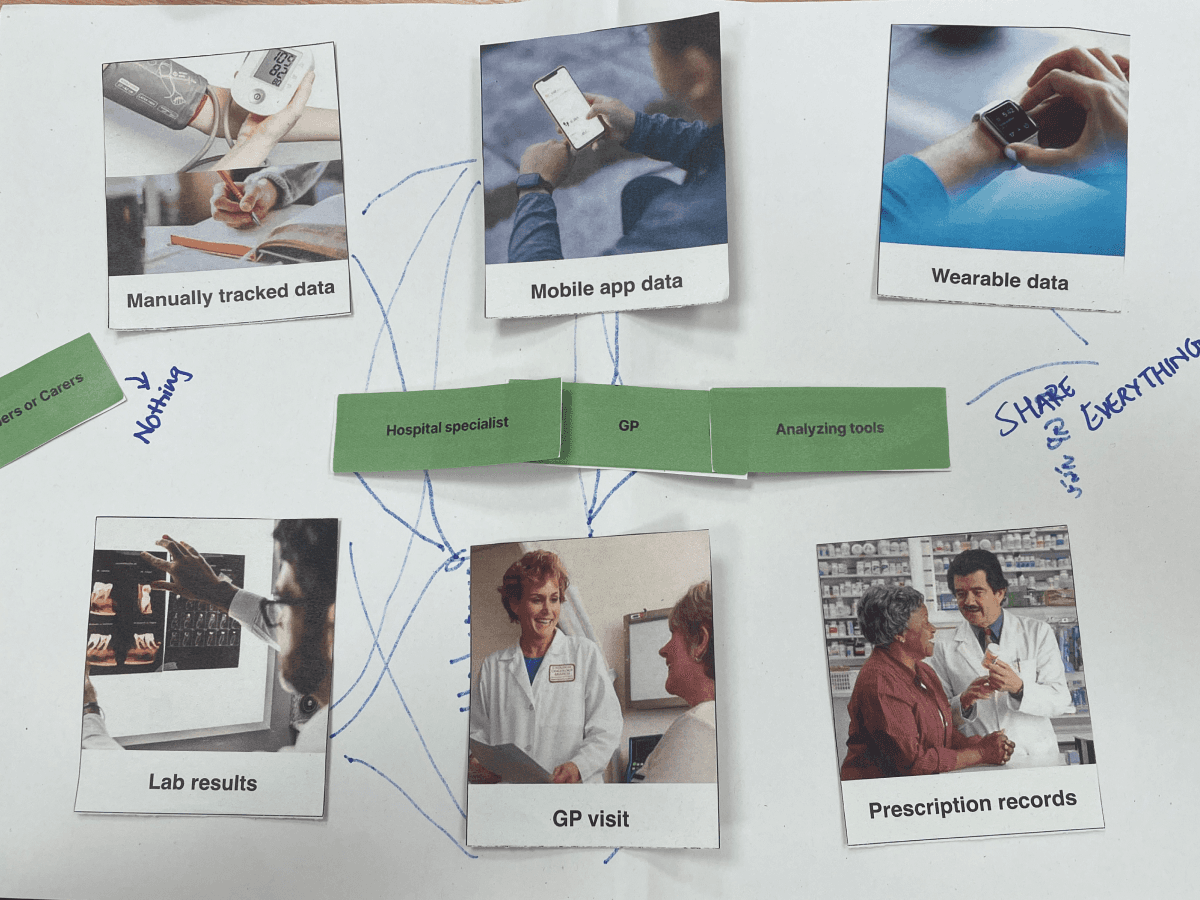
Card sorting with interviews to understand user needs
Define: Sharpening the Focus
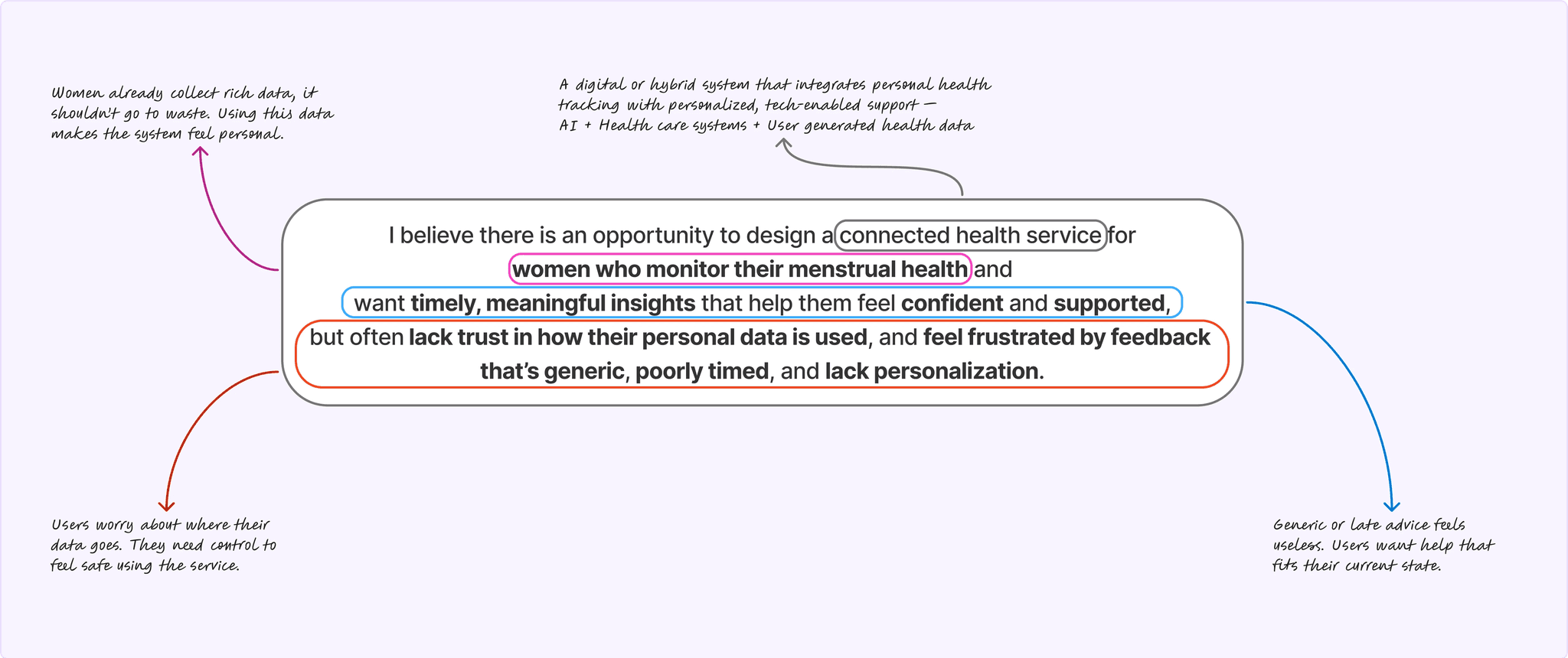
This deep dive revealed critical pain points: a profound distrust in data usage, frustration with generic advice, and a need for an empathetic system that understands their unique health story, not just their symptoms.
|
Persona: Maria - The Anxious Tracker
My core persona, Maria, a 28-year-old with PCOS, embodies the anxious tracker. She's motivated to manage her health but is easily frustrated by generic advice and feels disconnected due to a lack of emotional support from her apps.
Her guiding quote:
"I need a system that understands my story, not just my symptoms."
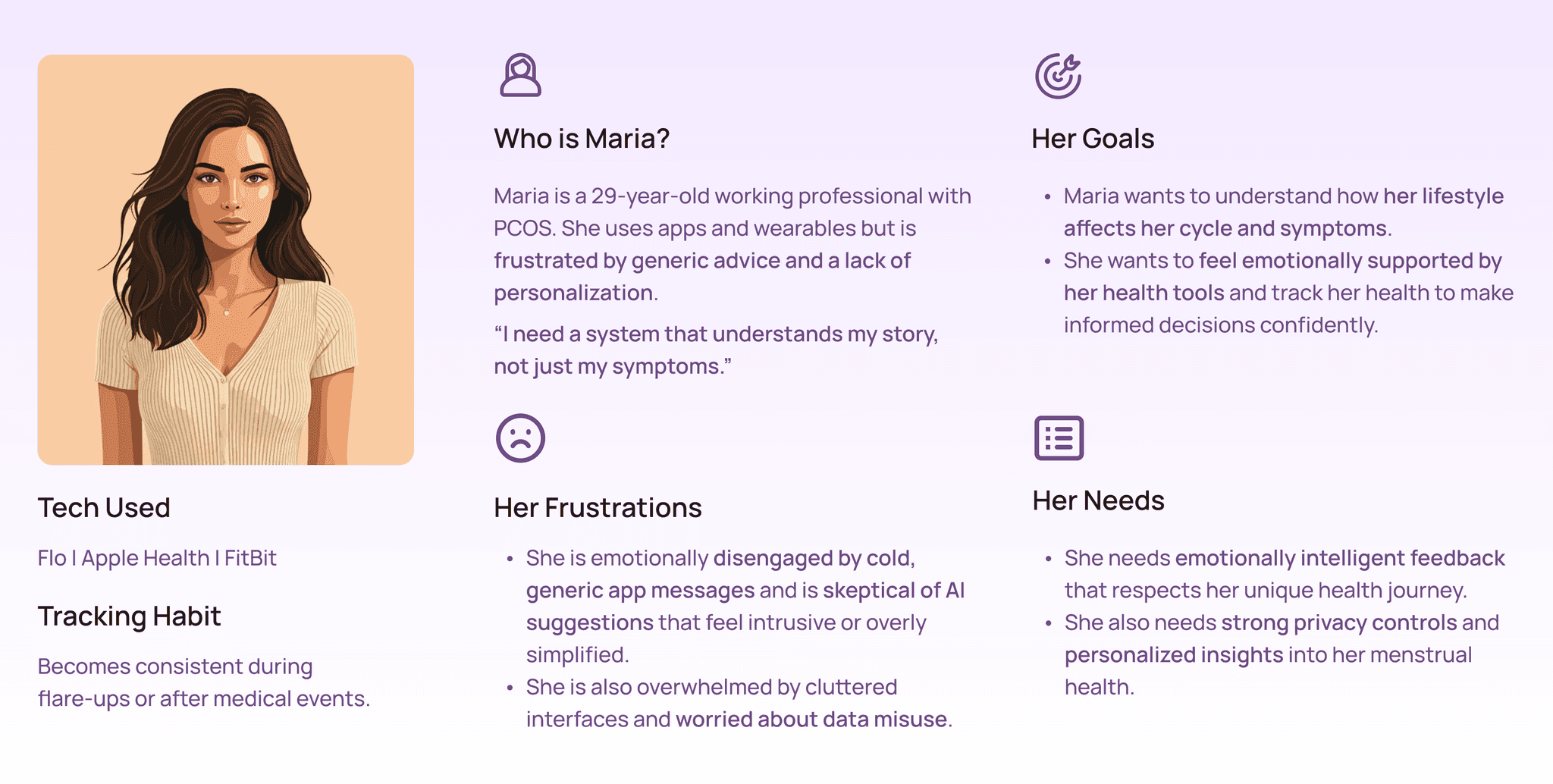
Maria: The anxious tracker
Develop: Exploring & Refining Solutions
Ideation: From Concepts to Core Pillars
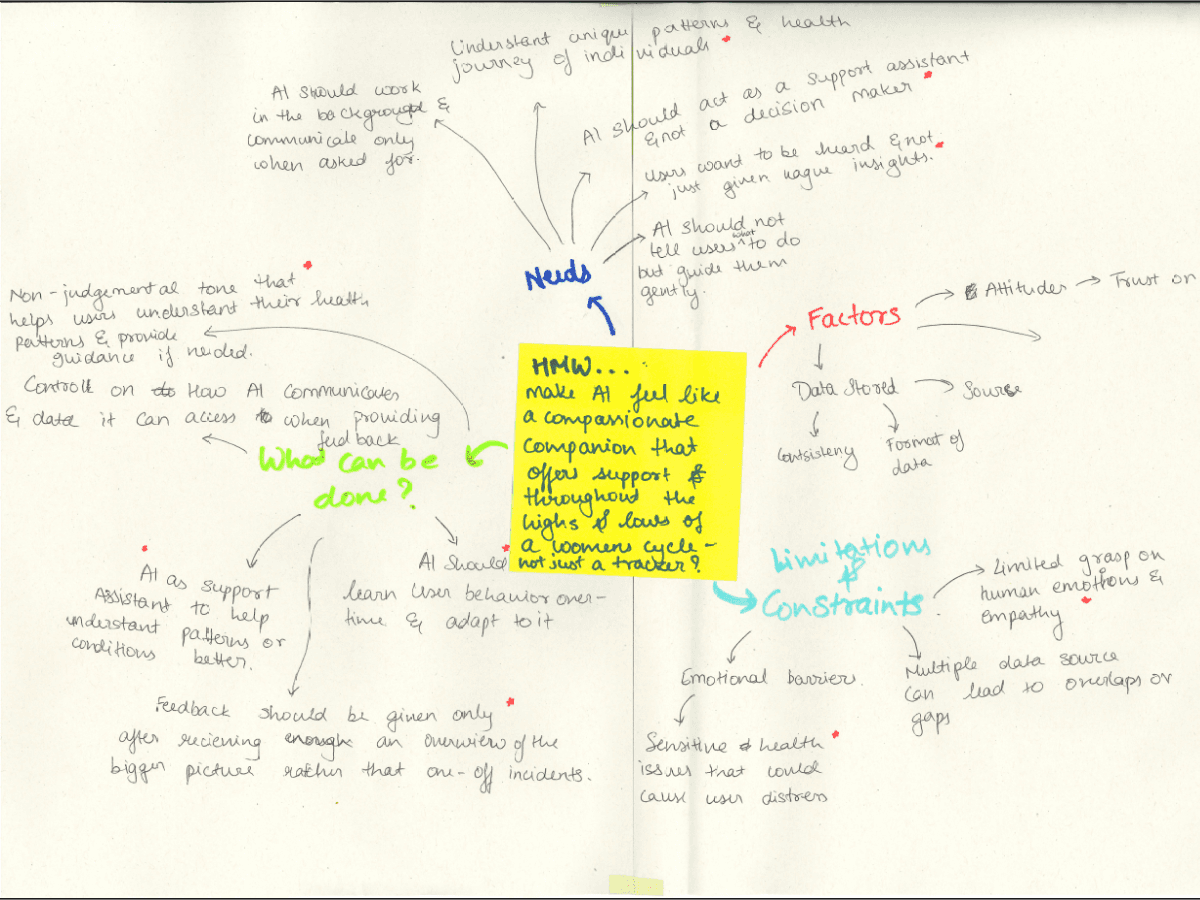
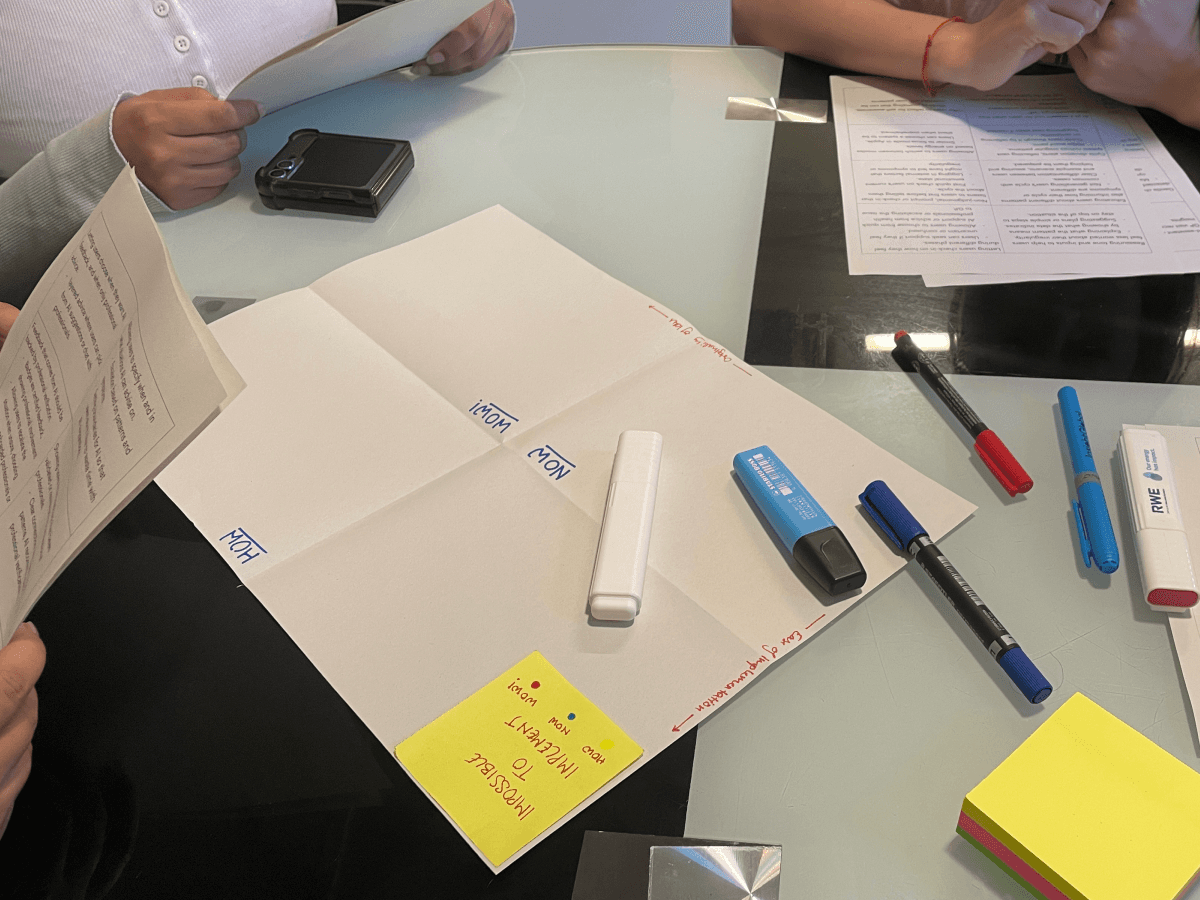
To explore a wide range of possibilities, I employed 8x8 brainstorming for rapid concept generation. Initial ideas were then translated into core pillars.
Experimenting with AI: Crafting an Empathetic Companion
A pivotal part of Allie's development involved iterative experimentation with AI to define its empathetic voice and interaction model.
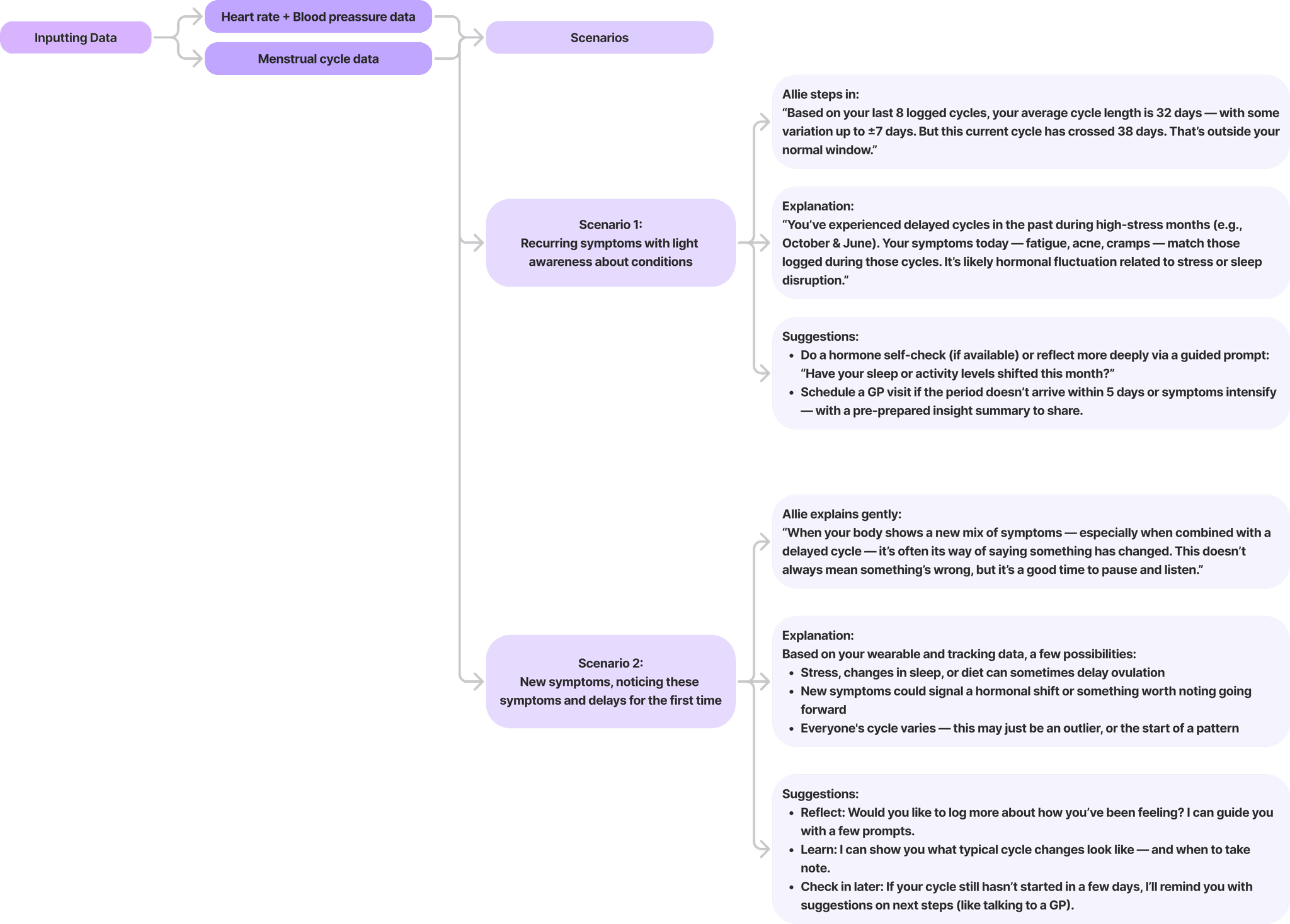
Rapid Conversational Prototyping (ChatGPT):
Used ChatGPT to simulate Allie's responses and interaction flows. This refined Allie's persona as a "Narrative Health Companion," ensuring interactions felt supportive and human-centred, presenting suggestions as choices, not commands.
The Solution: Allie - Your Narrative Health Companion
Allie transforms fragmented health data into an empowering, unified narrative, addressing the core goal of building trust, transparency, and confidence in women's health tracking.
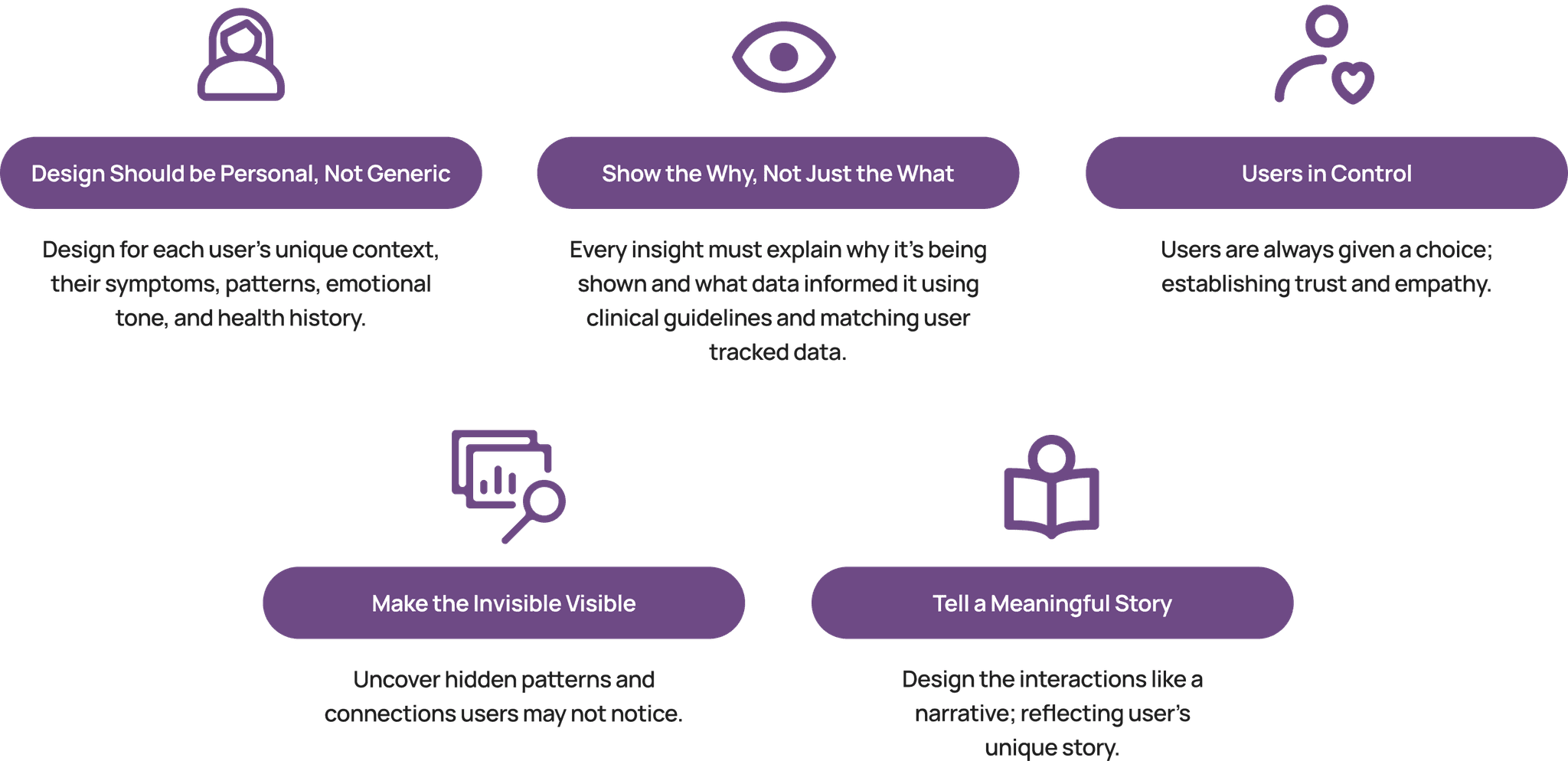
Allie's design principles:
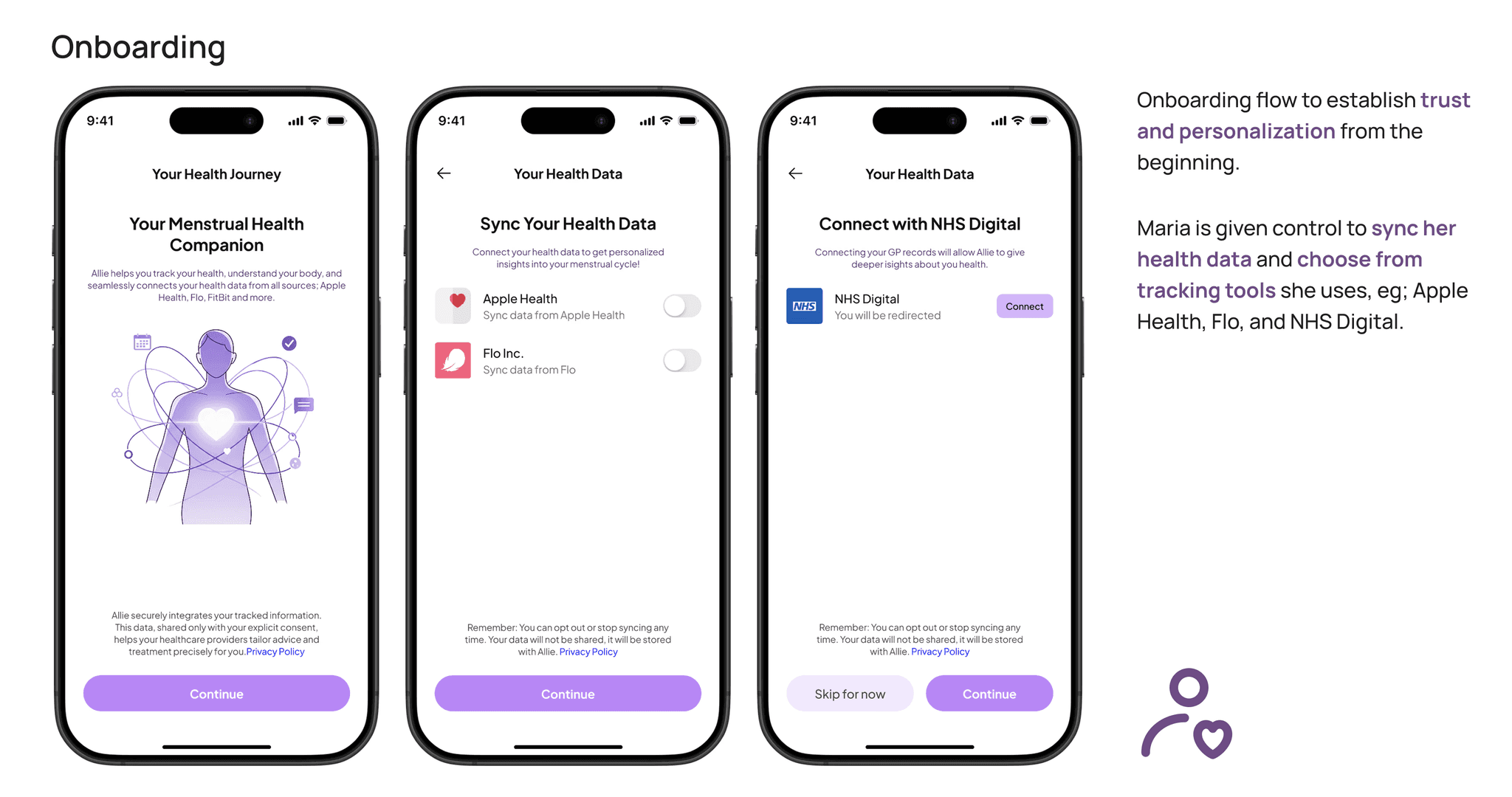
Unified Data Storytelling
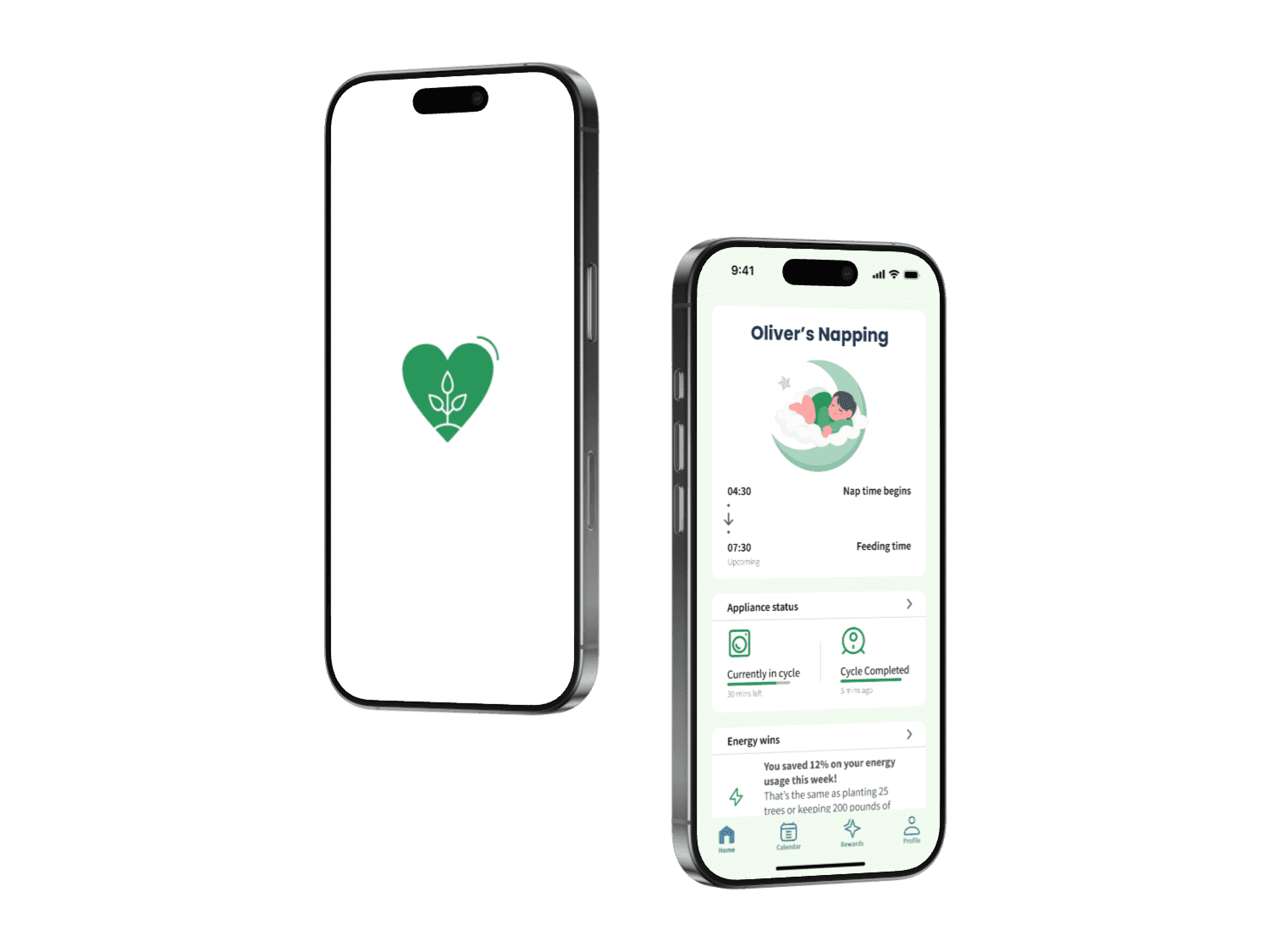
Allie acts as a central hub, seamlessly integrating data from your existing period trackers (e.g., Flo), wearable devices (e.g., Apple Health, Fitbit), and securely linking with NHS records. Instead of raw numbers, Allie presents your health information as a "Cycle Story" – a clear, visual narrative of your patterns, symptoms, and emotional well-being across your cycles.
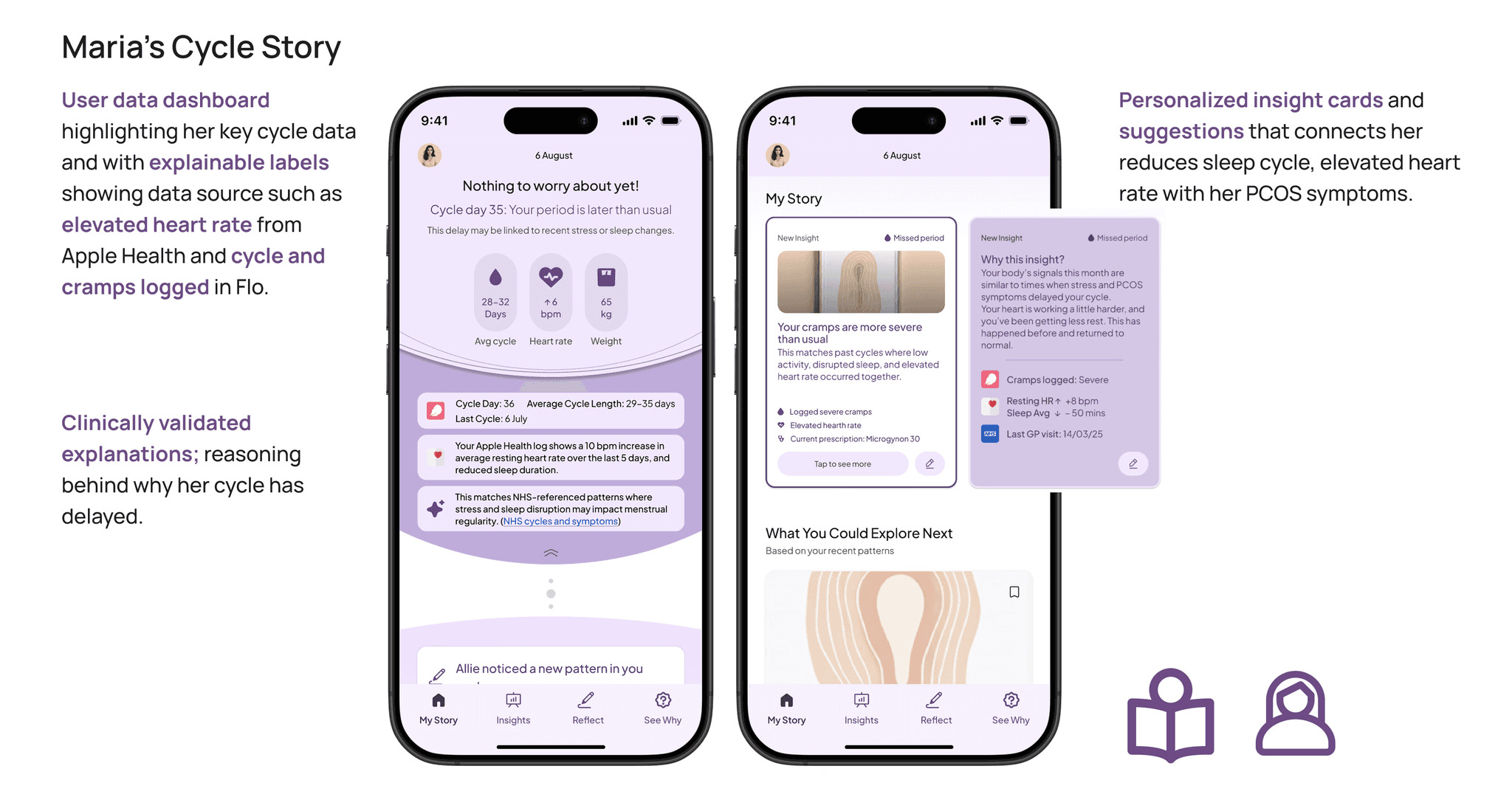
Explainable AI for Trusted Insights
Allie uses advanced, explainable AI to provide personalised insights. When an insight is generated, Allie offers a "Why this insight?" feature. Tapping this reveals the underlying "computational argument," showing you exactly which of your data points, combined with trusted NHS guidance, led to that conclusion. This builds profound trust and transparency.
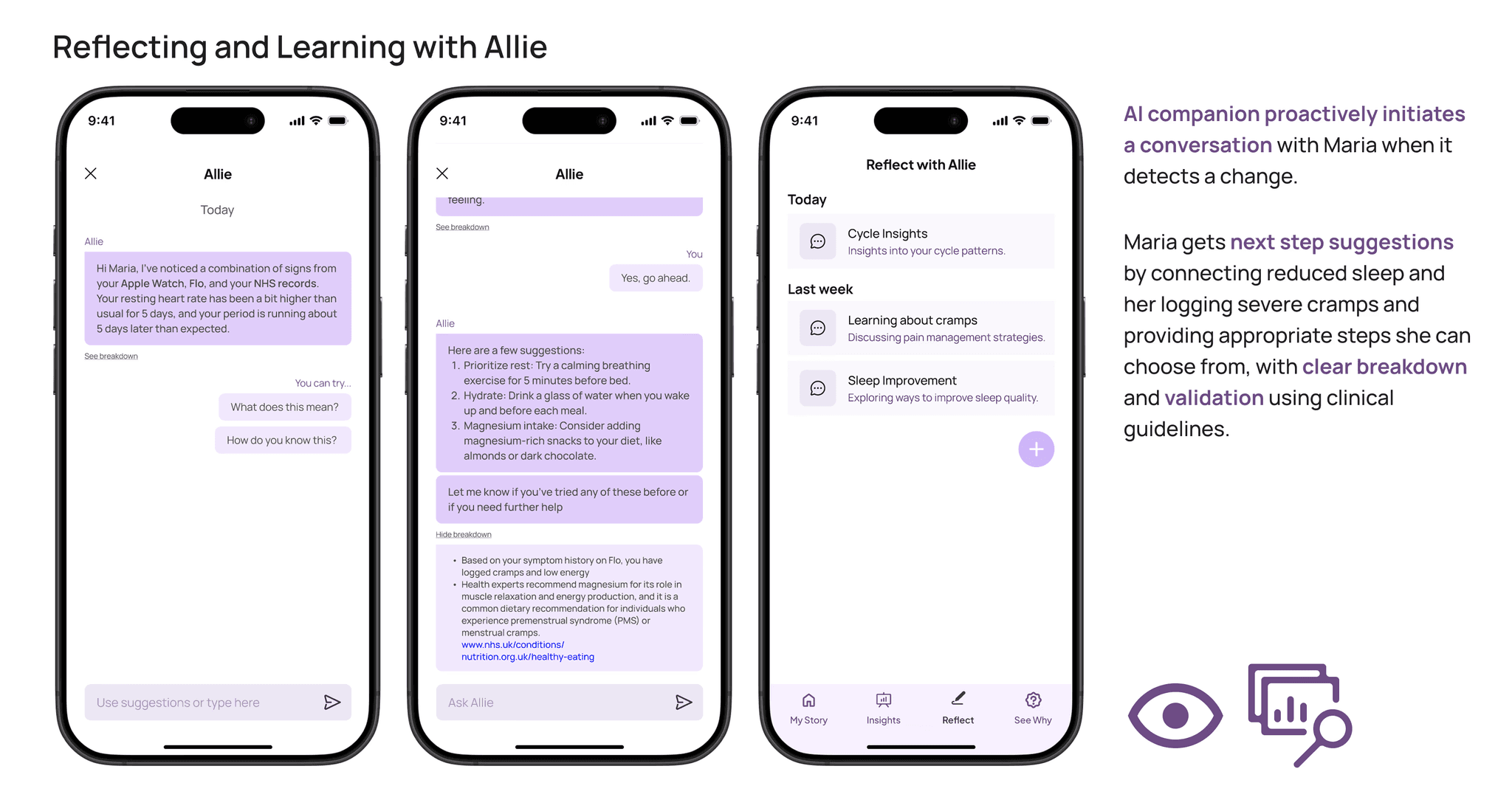
Empathetic and Personalized Guidance
Allie's AI persona is designed to be empathetic and non-judgmental. It proactively offers personalized suggestions (e.g., self-care tips) tailored to what has worked for you historically. All suggestions are presented as choices, empowering you to decide your next steps – whether to try a new relief method or prepare a summary for your GP
Service Blueprint: Mapping the Allie Ecosystem
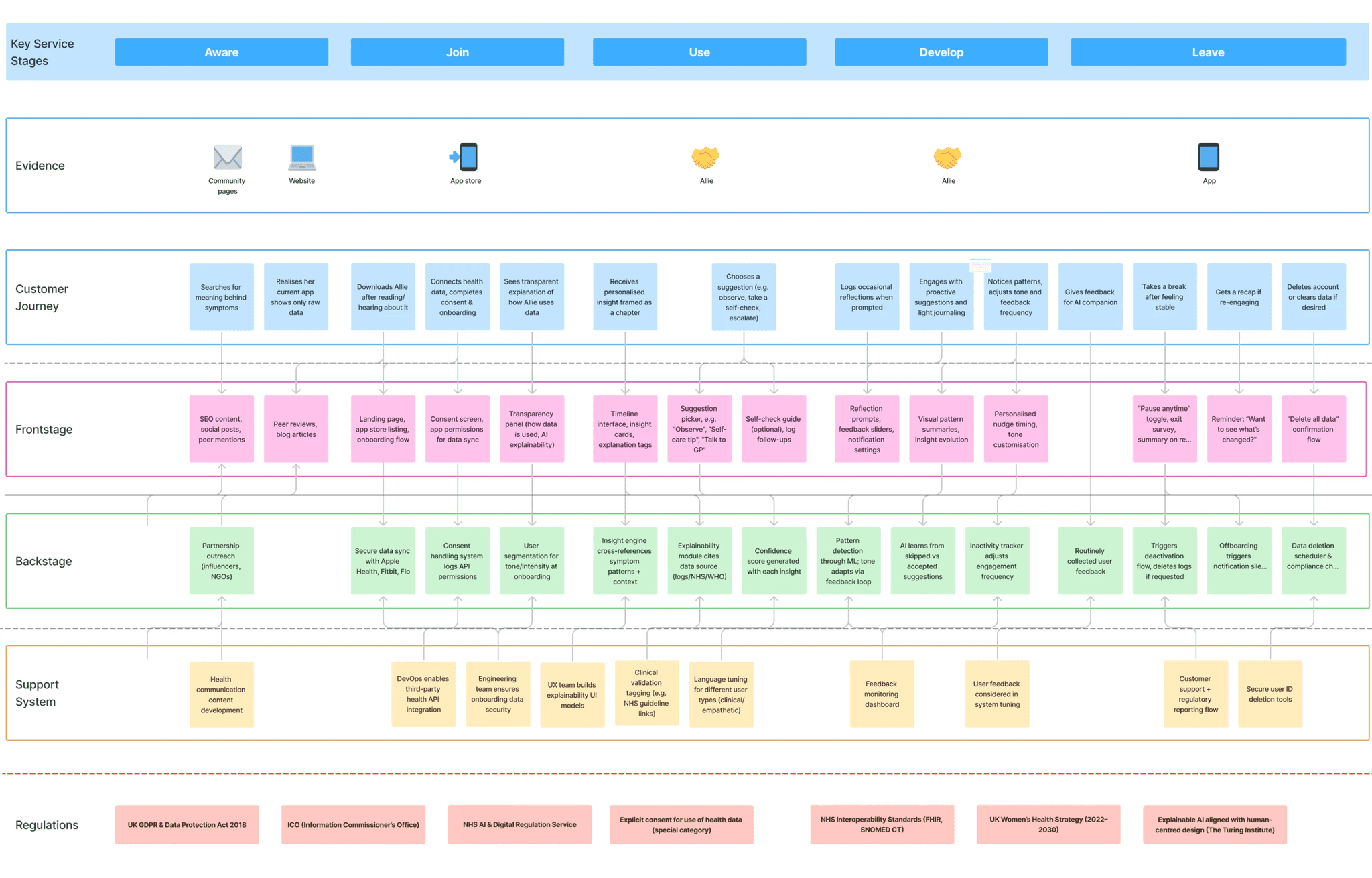
The Service Blueprint for Allie visualises the entire user journey, mapping every touchpoint with Allie's service against the visible frontstage actions and the intricate backstage processes. This includes internal systems, AI models, ethical data governance, and NHS standards, demonstrating how Allie functions as a cohesive, end-to-end service designed for both user experience and systemic integration.
The Bigger Picture
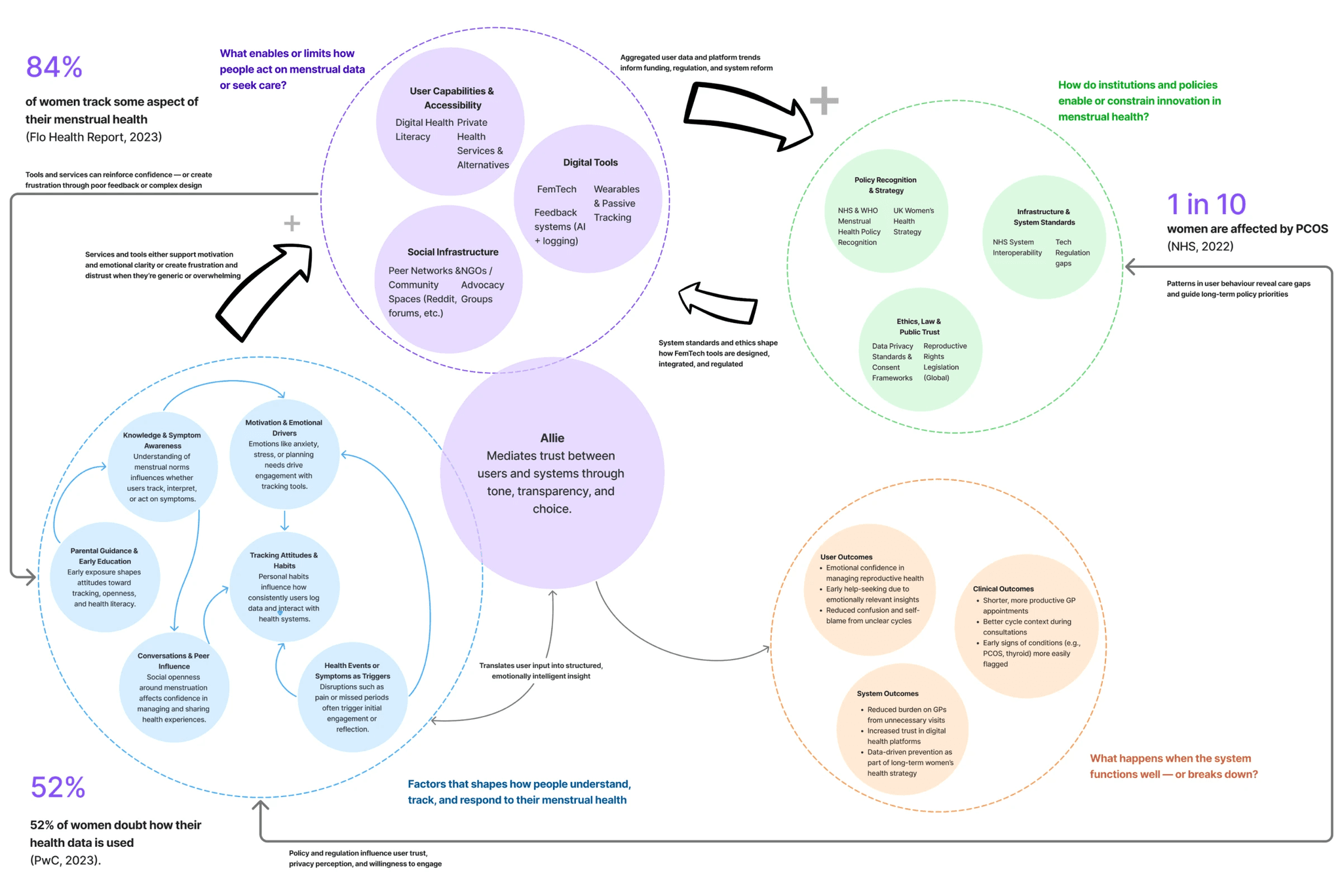
Allie's impact extends far beyond individual users. By bridging the gap between personal health data and the healthcare system, Allie aims for systemic change. It aligns directly with national health strategies to empower women, improve diagnostic pathways, and contribute to a richer understanding of women's health.
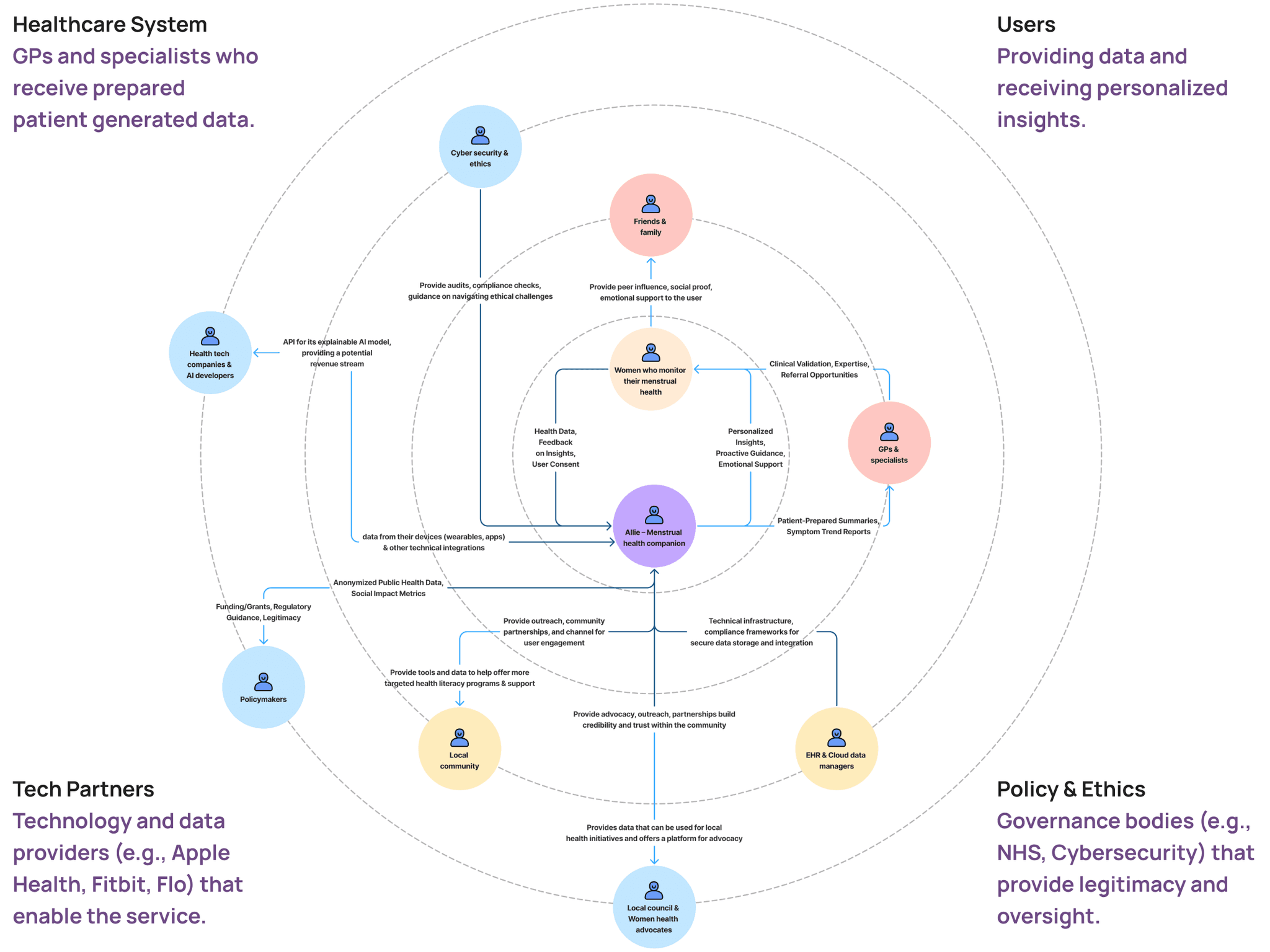
By facilitating earlier detection and promoting proactive self-management, Allie fosters a healthier, more informed population, ultimately reducing the burden on healthcare systems and driving forward crucial women's health research.
My Learnings: Shift in Mindset
This project fundamentally shifted my design philosophy:
User-Centric First: Moved from a "solution-first" industrial design mindset to designing by discovering and uncovering insights through user interactions, leading to more meaningful solutions.
Trust & Emotional Safety: Learned the paramount importance of designing for emotional safety and trust in sensitive domains, prioritizing transparency and user control.
Ethical AI Integration: Gained invaluable experience in blending AI with ethical, empathetic design, leveraging explainability and user-controlled choices to create a supportive companion.
Holistic Service Thinking: Developed a deeper understanding of holistic service thinking, designing for entire ecosystems, from user touchpoints to systemic integration with bodies like the NHS.