
Experience Design
EcoBud
6 Weeks
About the Project
My Role
Goal
Helping parents create a sustainable home while balancing childcare and daily tasks.
Estimated Outcomes
Based on existing UK household energy data and behavioural change research:
15%
increase in energy-saving engagement
£120/yr
in energy savings for low-income families
Challenge
Help new parents simplify daily routines, promote energy efficiency, and support smart decision-making—without adding to their mental load.
Project Context
This master's project at Loughborough University, in collaboration with GenGame, focused on driving a consumer-led, low-carbon transition. The brief included identifying target users, defining user needs, and delivering a UX vision with a mid-fidelity prototype—guided by Lean and Agile design principles.
Understanding Users
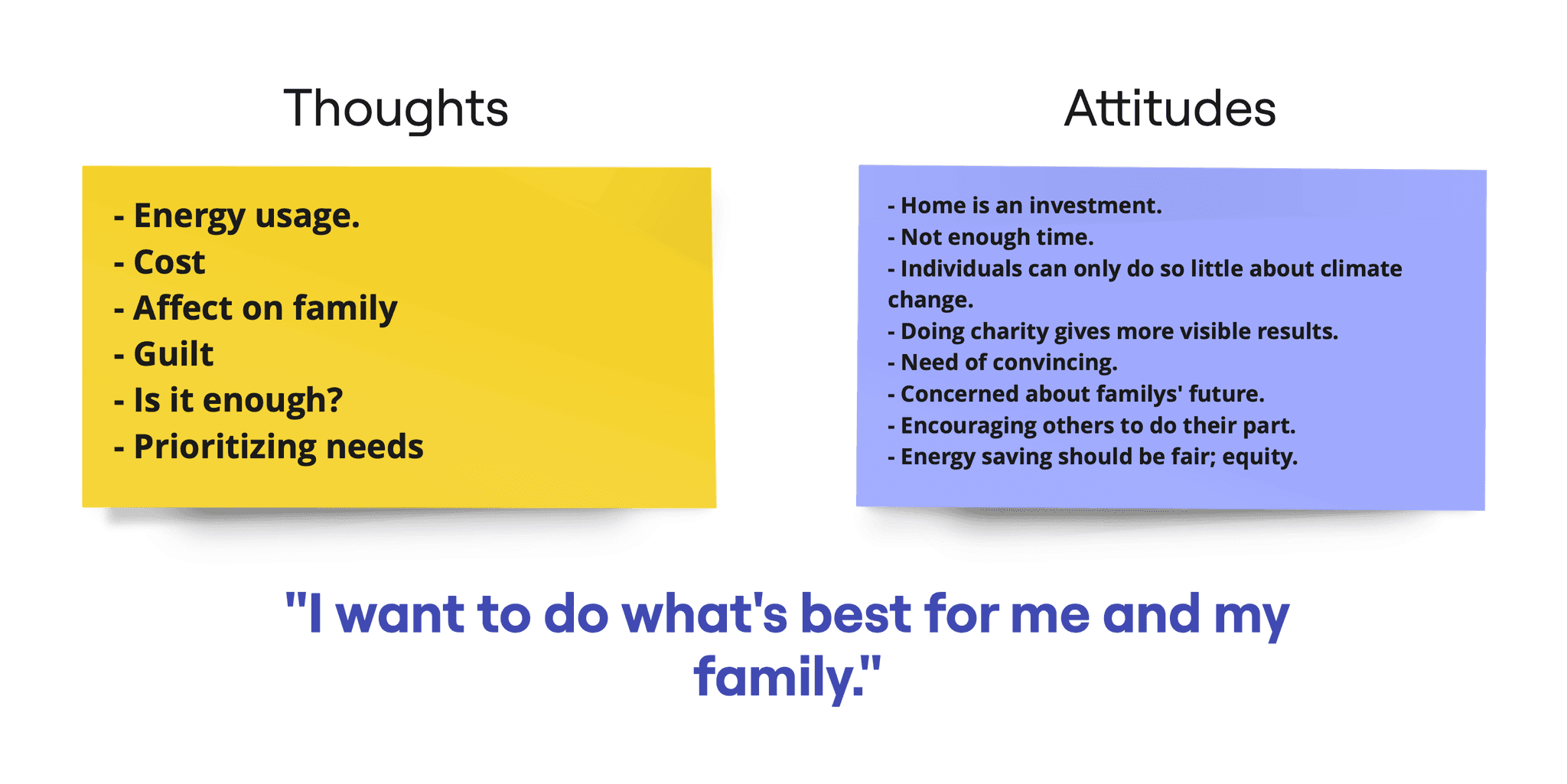
User archetype
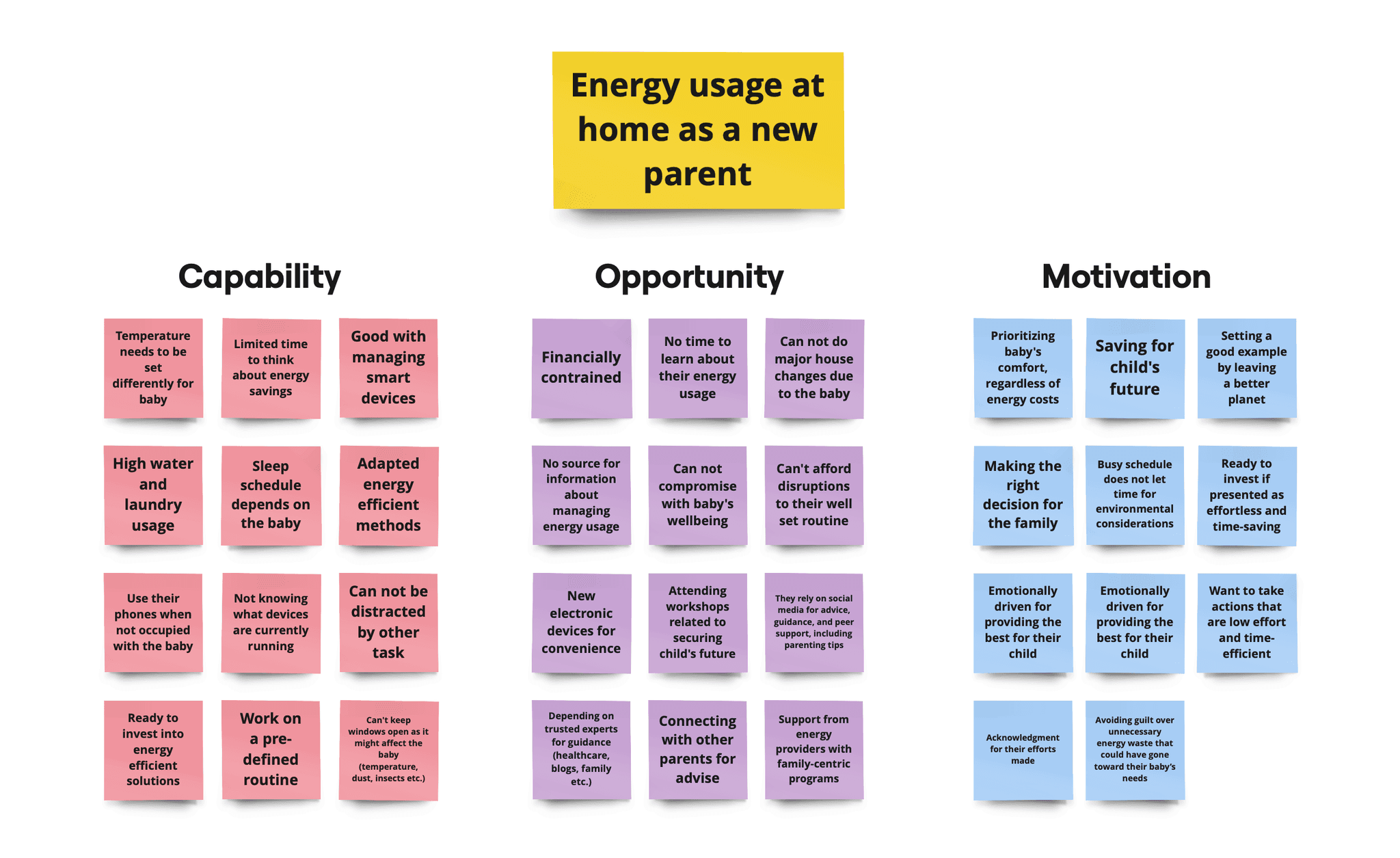
Applying the COM-B Model
Defining the Problem
"As a new parent with limited time and money, I need to know how I can engage positively in climate action with minimal effort to build a better future for my child."
This statement captures the emotional core of the problem—parents want to take action, but they need the process to be simple, clear, and rewarding.
Key insights and challenges:
Parents care about sustainability but struggle to prioritize it in their daily routines.
They need a low-effort, practical way to integrate energy-saving habits into their lifestyle.
Seeing immediate benefits—whether financial savings or a healthier home environment—is crucial to motivation.
Proto-Persona Development
To better understand the target users, I developed proto-personas focusing on new parents who prioritize their child’s future while managing busy routines. By analyzing their goals, behaviors, and pain points, I identified challenges in adopting energy-saving habits.
Why Sarah matters? She represented the tension between good intentions and lack of time/confidence.
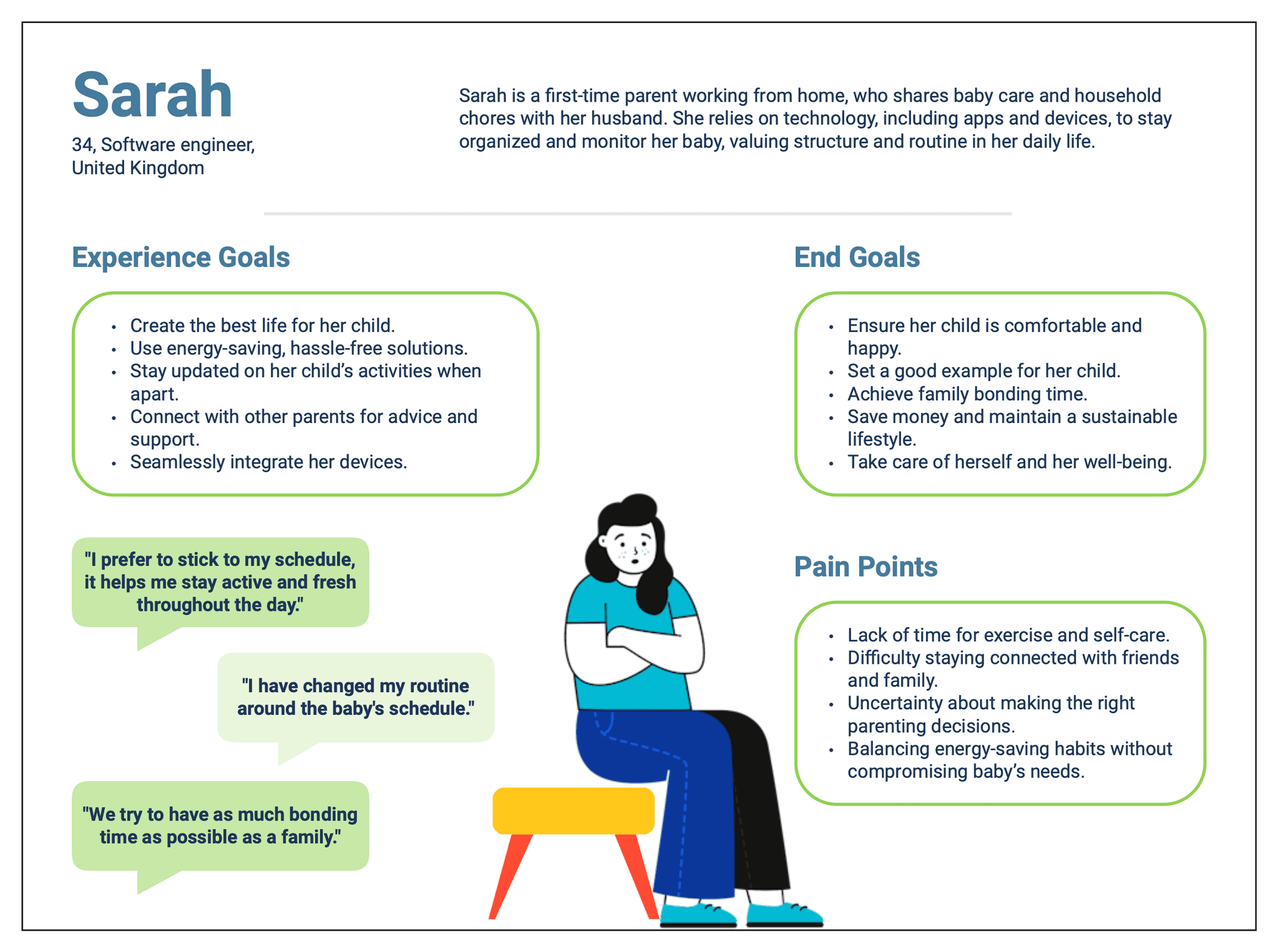
Proto-persona defining target user needs
The Vision Moving Ahead
UX Vision
There is an opportunity to design a mobile app for new parents with limited time and money, who want to take positive action on climate change at home but are worried about compromising their child’s comfort so that they feel reassured about creating a better future for their child.
User Outcome
Feel reassured about creating a better future for their child.
Business Outcome
Positive engagement of households with climate action.
Reassuring
Users should feel supported and confident in their choices, knowing they are making a difference.
Trustworthy
Information should be reliable, providing well-informed recommendations based on real data.
Empowering
Parents should feel in control, knowing their actions are contributing to a better future for their child.
Simple
The app should require minimal effort, making it easy to incorporate into daily life.
Nudging
Instead of overwhelming users with major changes, the app should gently guide them toward small, manageable actions.
Bringing the Idea to Life
With the foundations set, I focused on building a solution tailored to the needs of young families.
The app concept:
Smart Insights – Personalized energy-saving tips based on real-time household data.
Low-Effort Actions – Small, achievable steps that integrate easily into daily routines.
Reward System – Positive reinforcement to keep parents motivated.
Child-Centric Framing – Showcasing how sustainable actions directly benefit their child’s future.
The app isn’t about drastic lifestyle changes—it’s about meeting parents where they are and making sustainability an easy, natural part of their everyday lives.
Feature Set Ideation
Building on a vision statement and experience design principles, the next step was to define the core functionalities of the app. Using the MoSCoW method (Must-have, Should-have, Could-have, Won’t-have), features were categorized based on priority to ensure a balance between feasibility and impact.
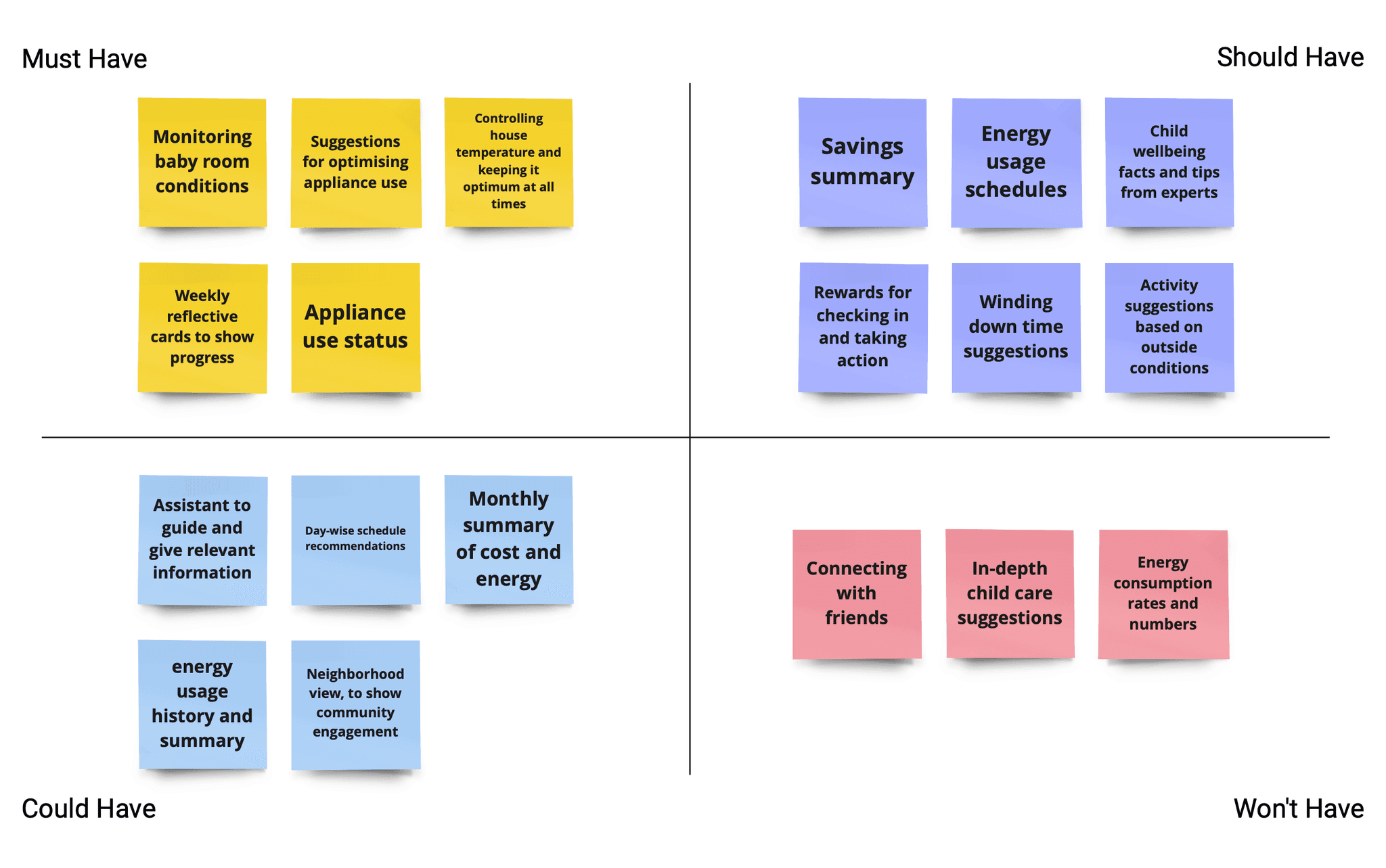
Prioritizing key features
After defining the core features, the next step was to design a seamless user journey that integrates sustainability into daily routines without adding complexity.
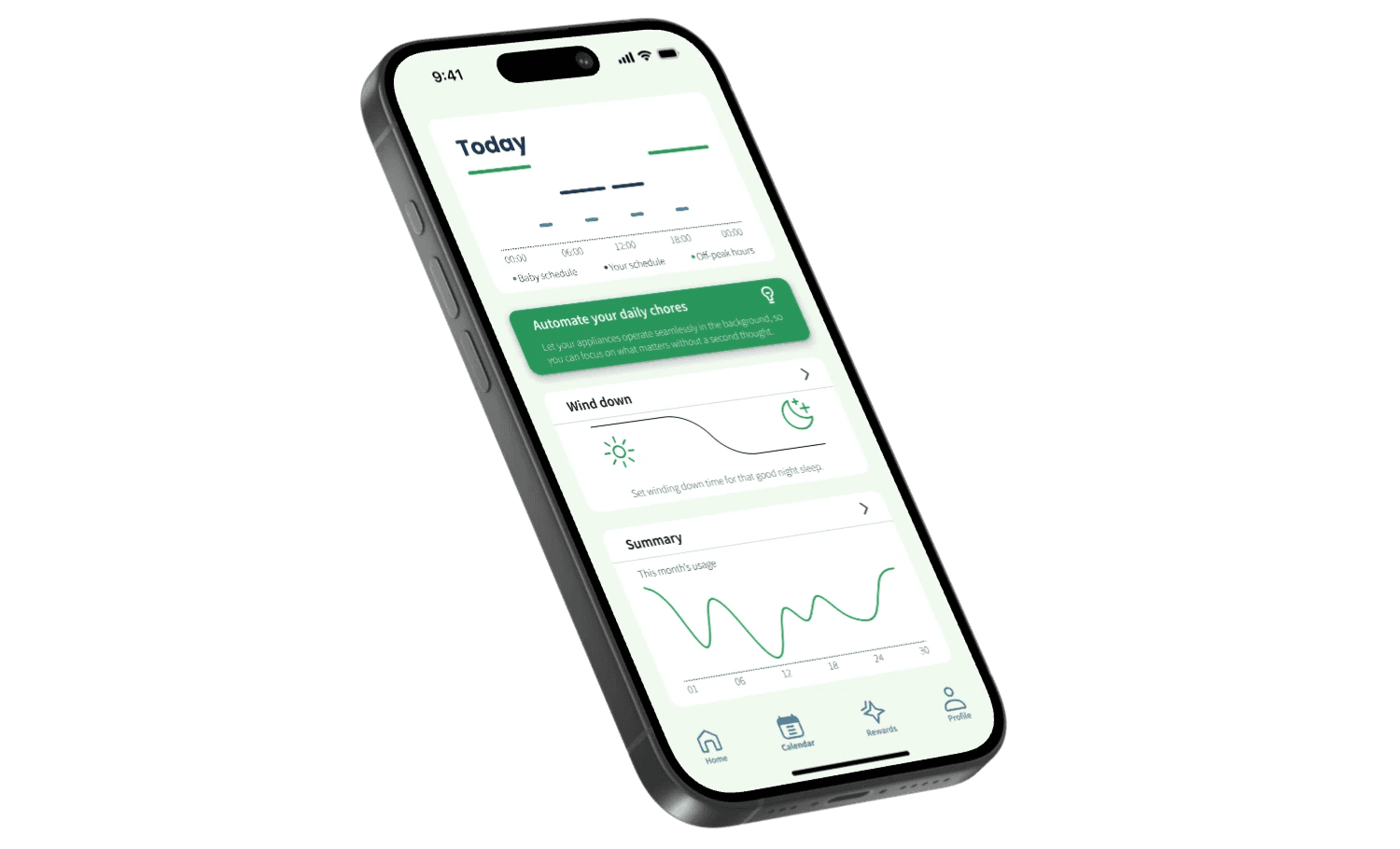
Smart Scheduling
Effortlessly organize household chores, baby routines, and personal tasks in one place, ensuring smooth day-to-day management.
Eco Rewards System
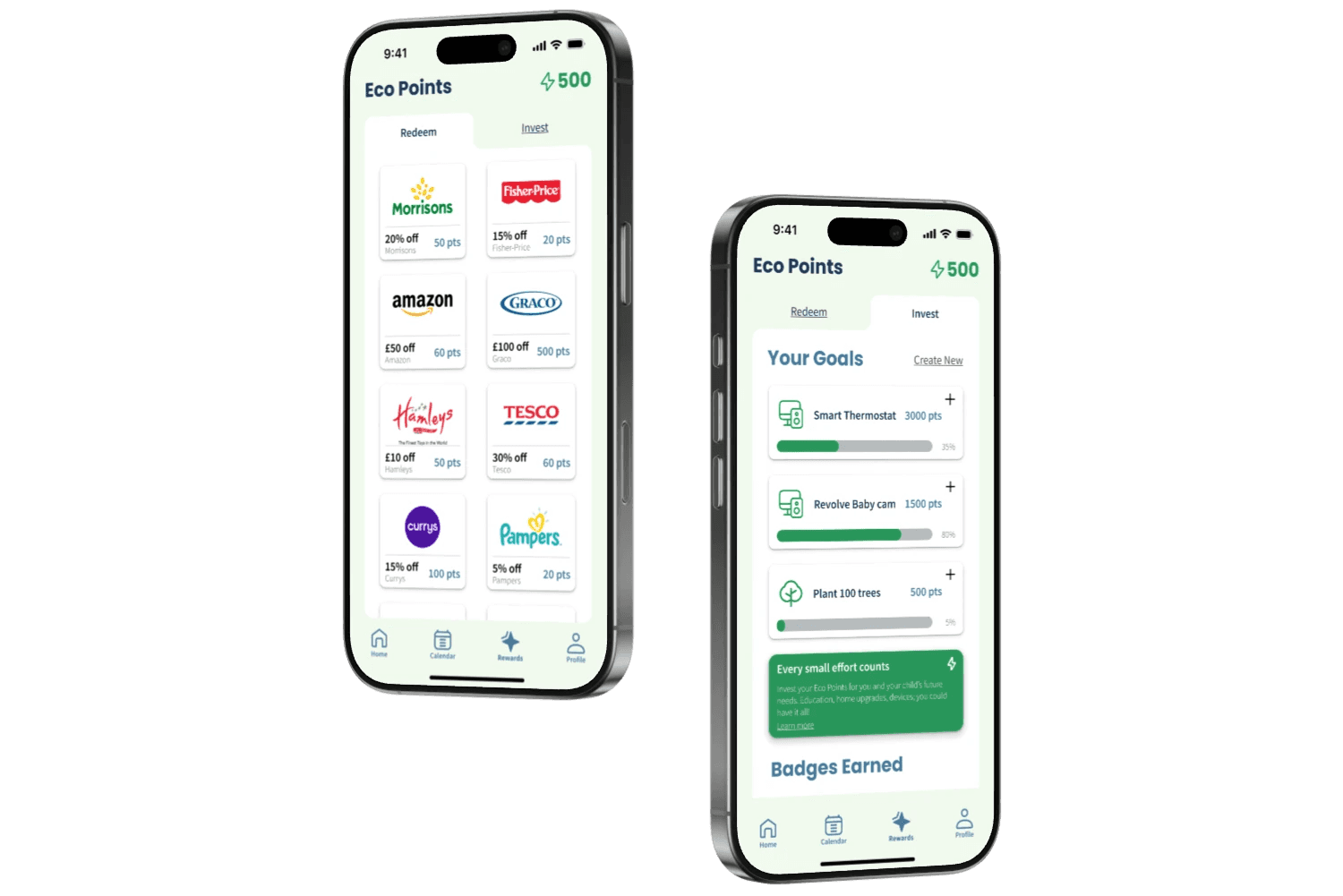
Earn Eco Points for energy-saving actions, which can be redeemed for vouchers or invested in future goals.
Automated Appliance control
Set up and control appliances based on your schedule, optimizing energy efficiency and saving time.
Nurture Notes
Receive personalized tips and advice from healthcare experts to support your family’s health and well-being.
Energy Wins
Track your energy-saving contributions with clear, actionable insights, helping you build sustainable habits.
Sitemap Development
Moving forward to creating sitemaps, the goal was to develop a clear, intuitive, and user-friendly structure that allowed parents to efficiently manage their home automation, energy usage, and rewards system.
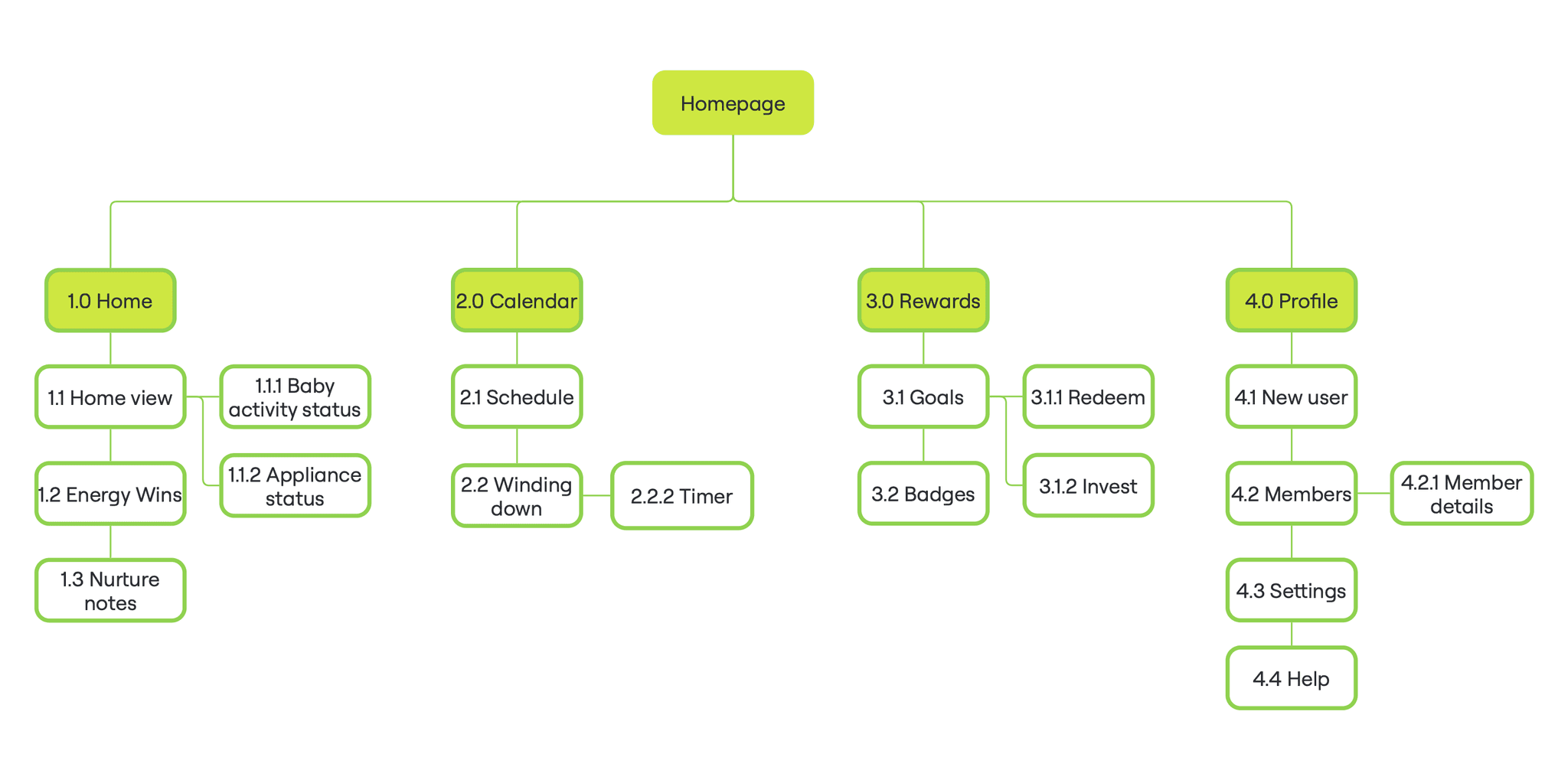
Sitemap to define information architecture
To visualize how parents like Sarah and David would engage with the app in real life, a storyboard was created. This method captures key moments in their journey, illustrating how the app seamlessly integrates sustainability into their daily routines without adding extra complexity.
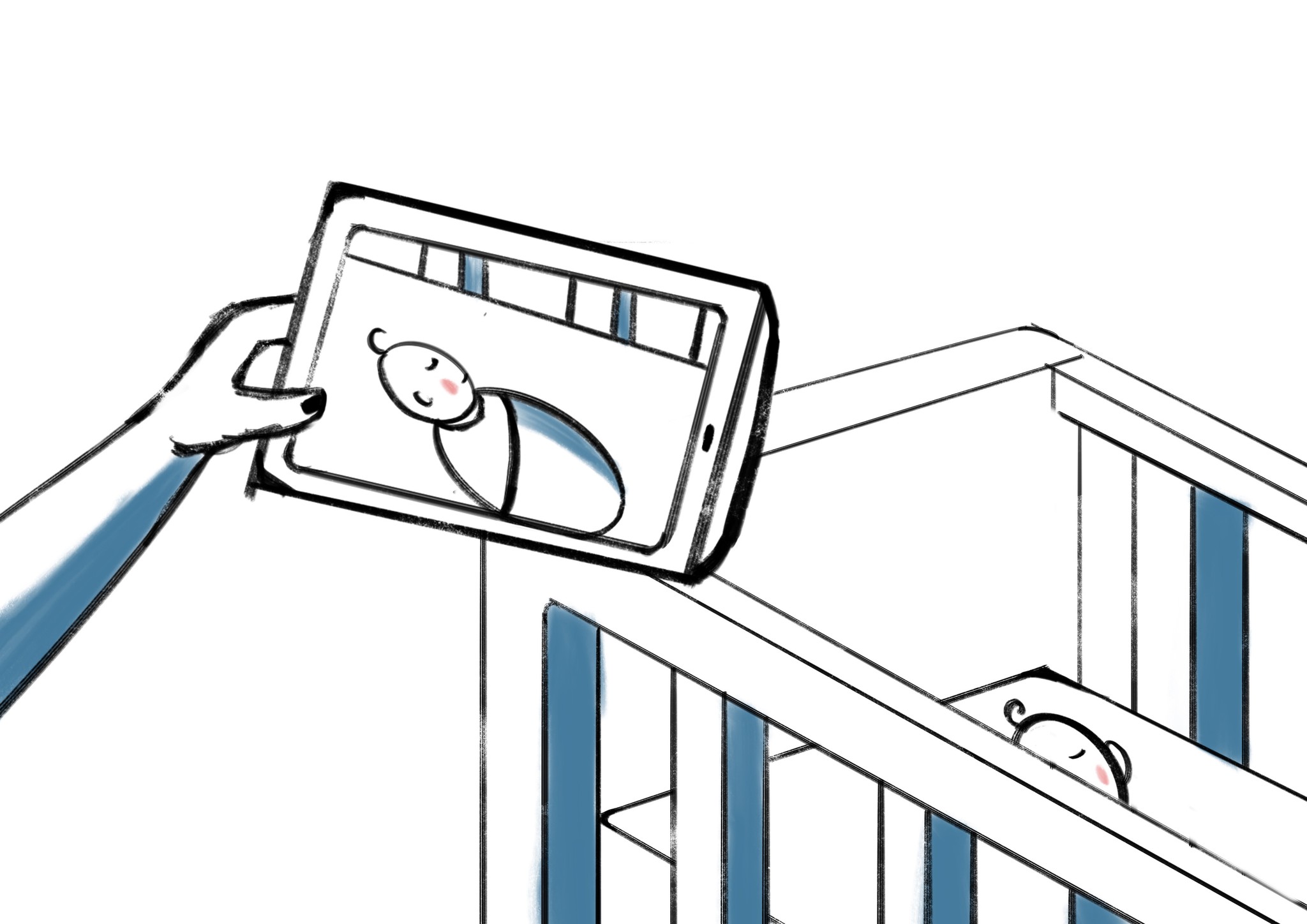
Sarah gently places Oliver in his crib for his nap and checks the baby monitor to ensure it’s working.
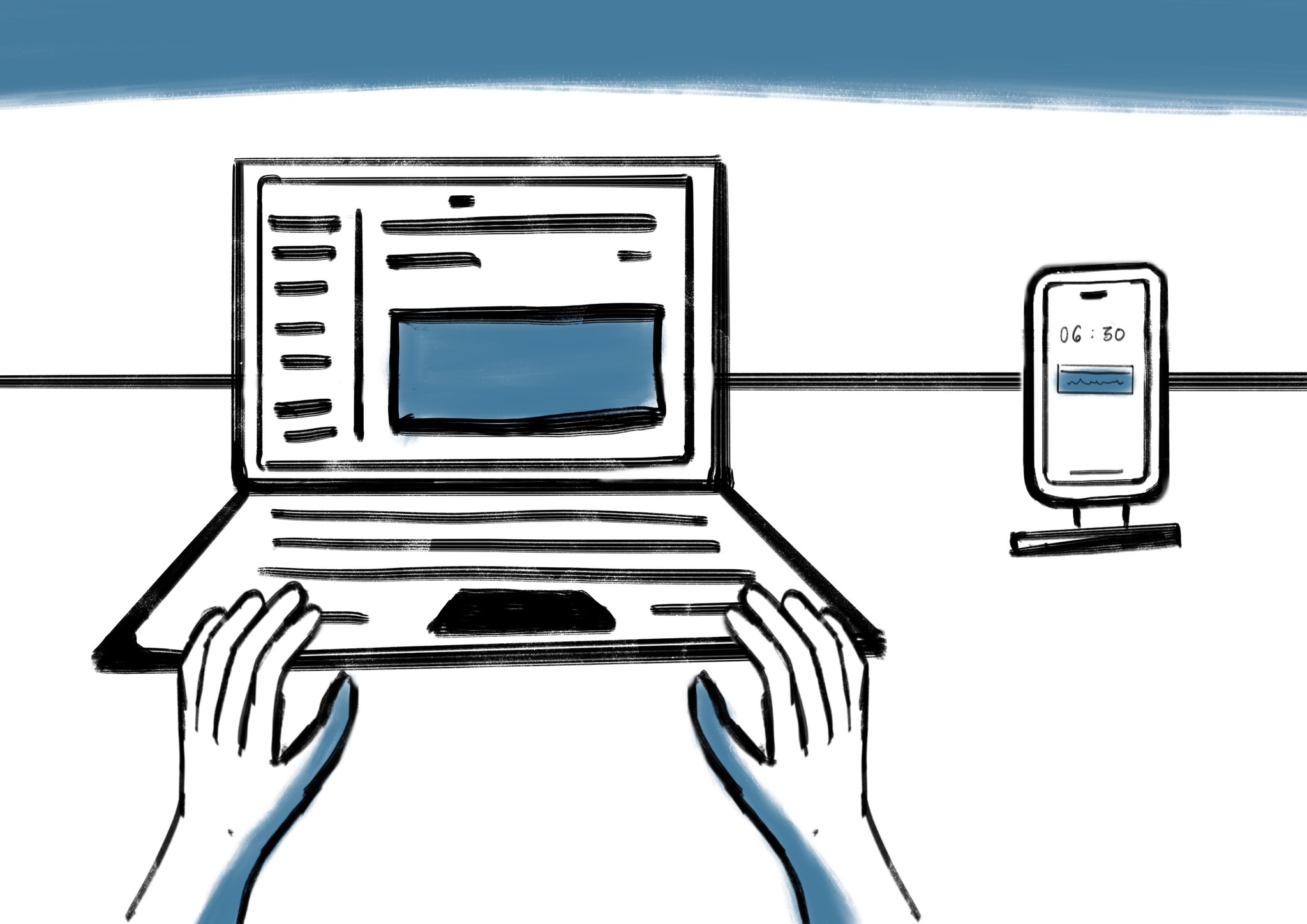
With Oliver down for his nap, Sarah moves to her desk, opens her laptop, and starts checking emails.
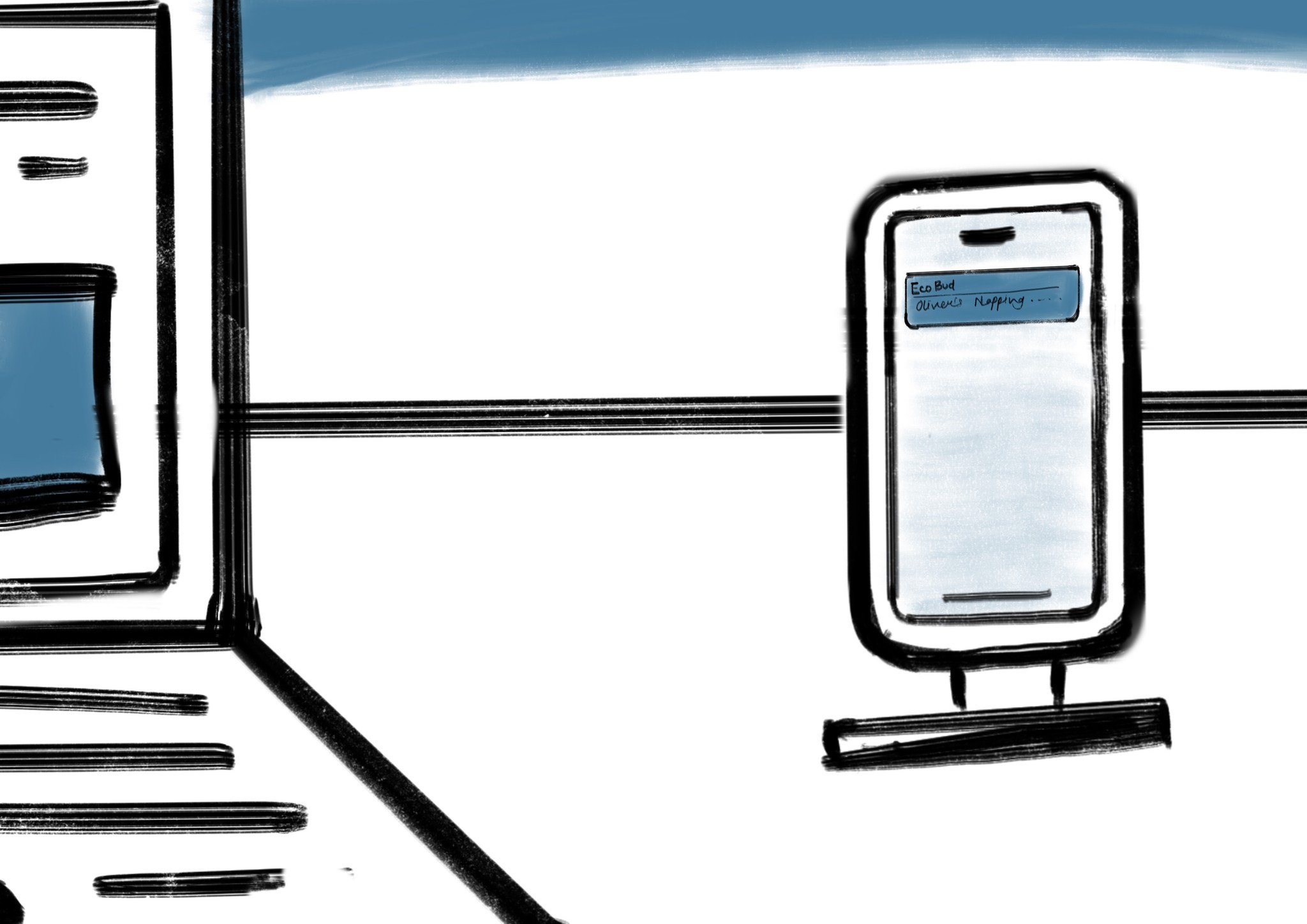
While Sarah is working she gets a notification from EcoBud saying,
“Oliver is in for a good nap! The nursery temperature is set to optimum for a good sleep.”
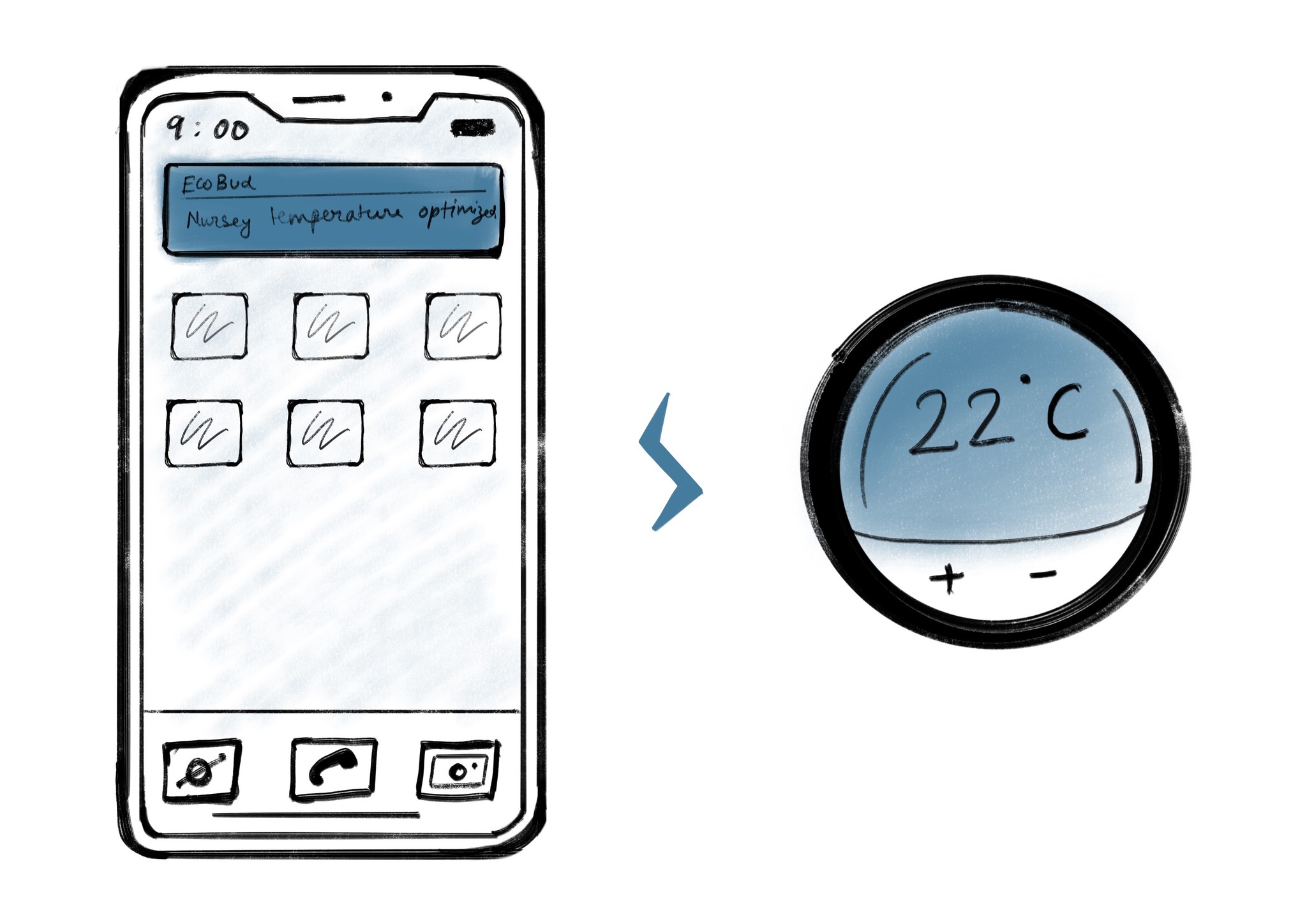
The app notifies about earning Eco Points for optimal energy use throughout the day.
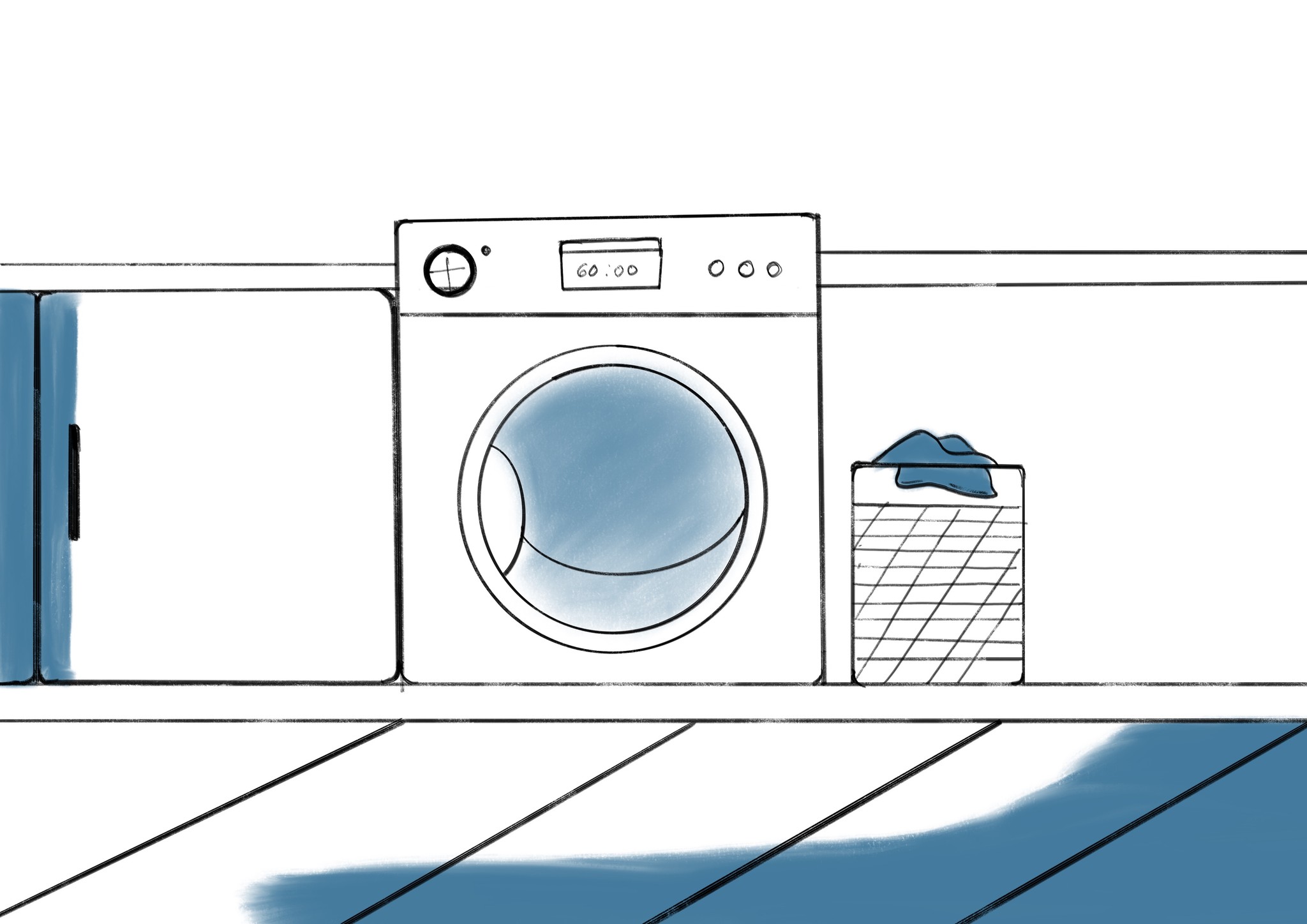
Sarah remembers about the laundry and goes to put it in the machine but doesn’t turn it on as it might wake up Oliver.
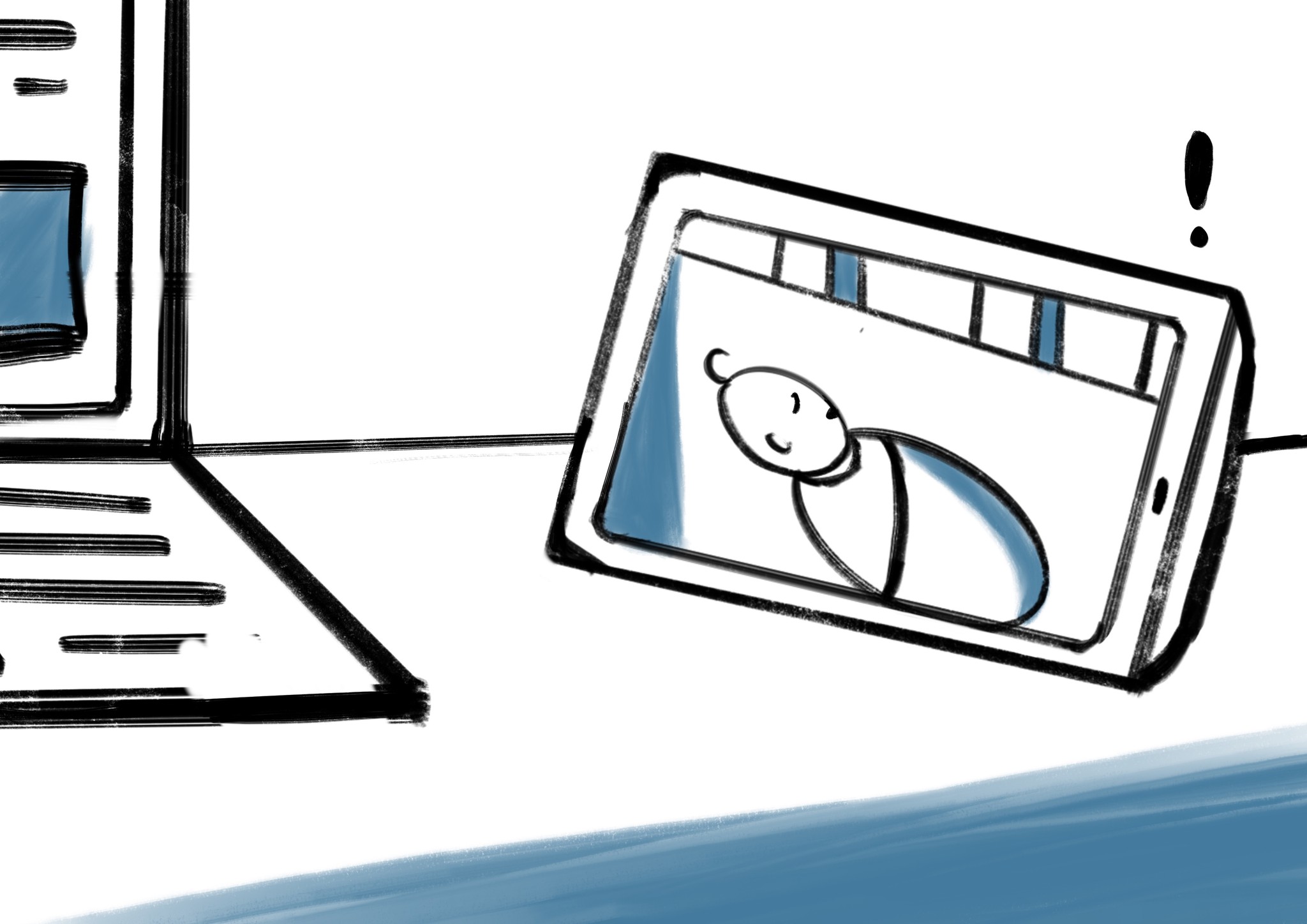
As she thinks of going back to work, the baby monitor ping’s, notifying Sarah that Oliver is awake and fussing.
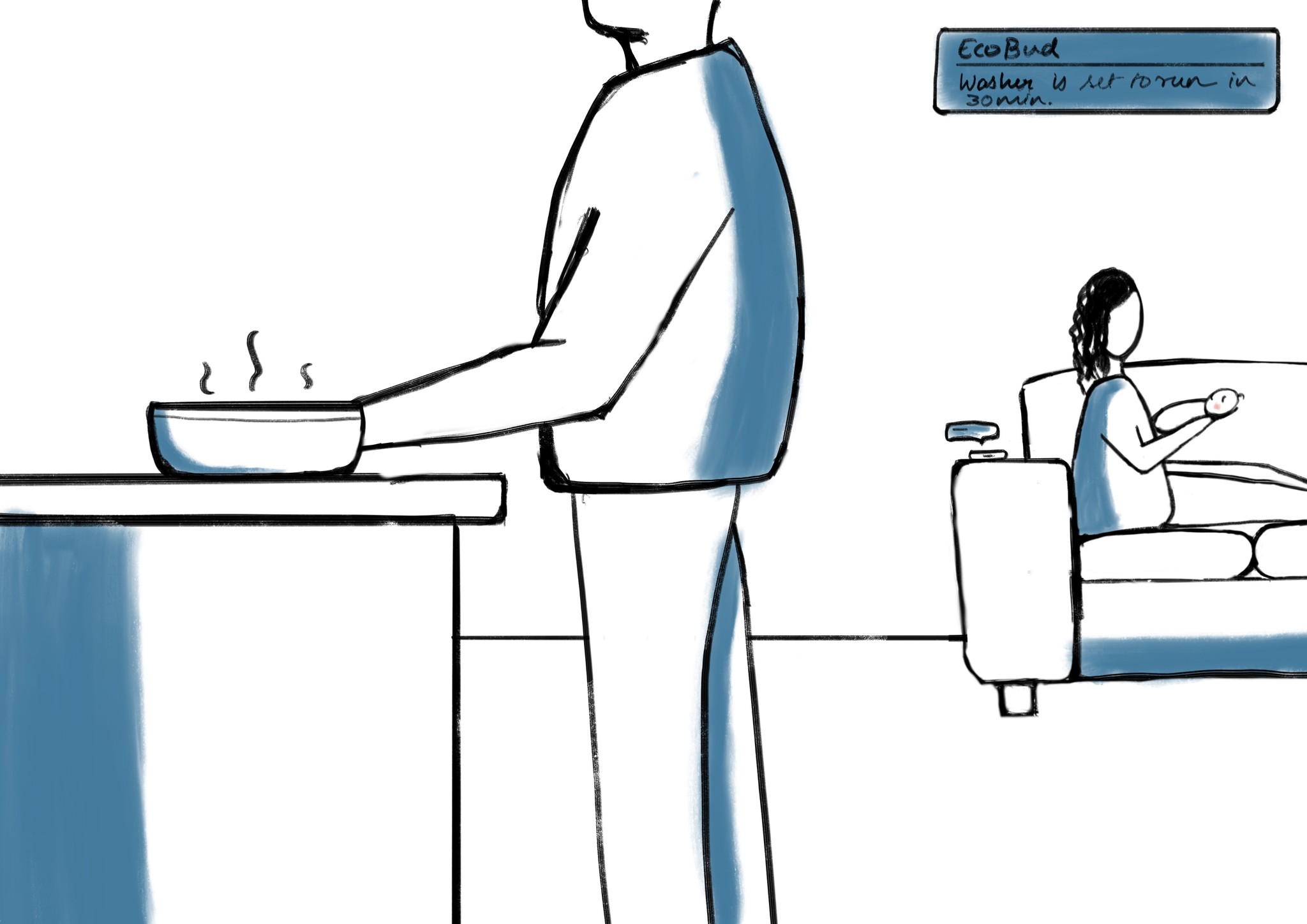
Sarah feeds Oliver while David prepares dinner. Meanwhile, the app notifies her, “Looks like Oliver’s up! The washer is set to run in 30 mins.”
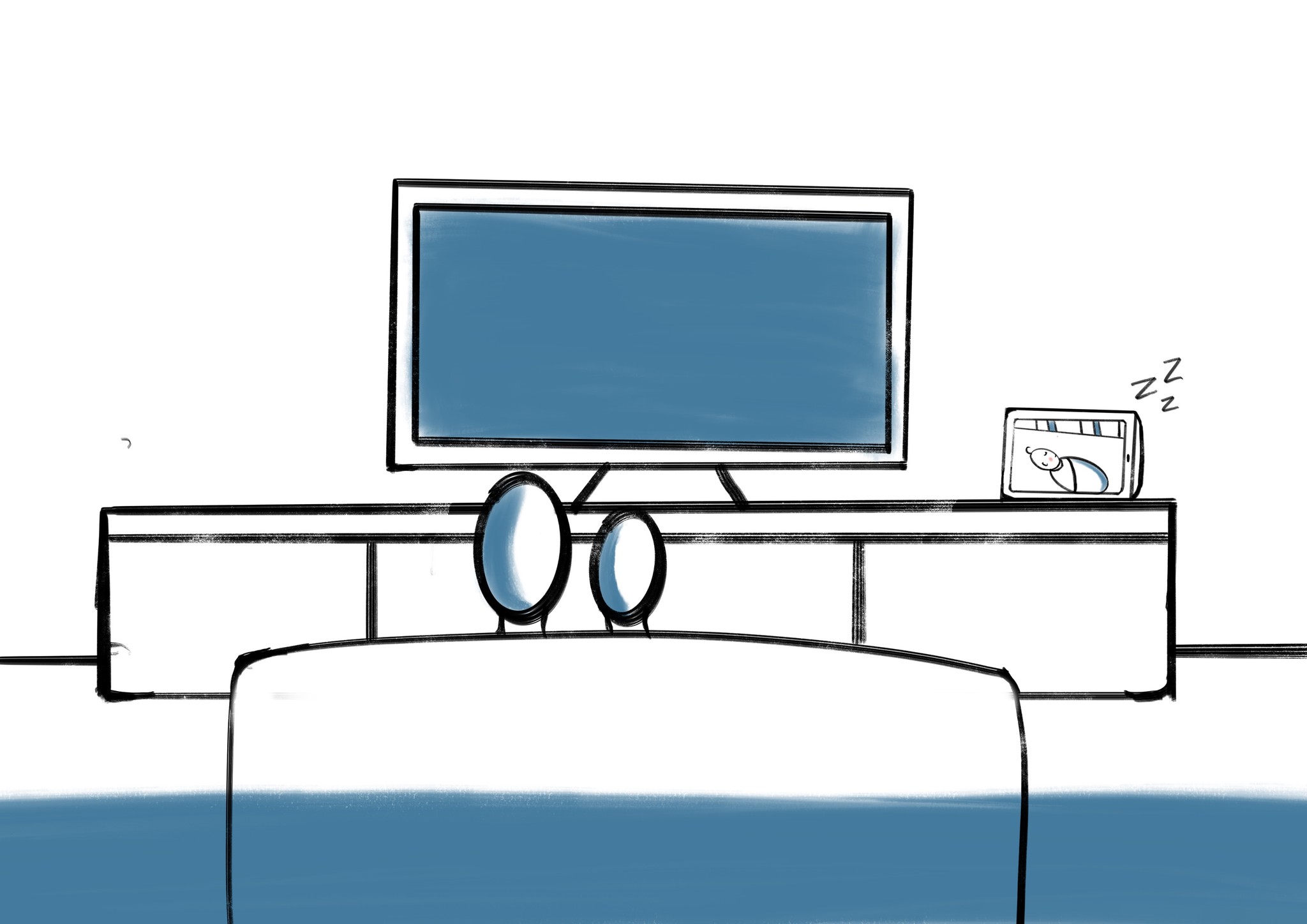
All the chores have been done and Oliver is put down for the night. Sarah and David wind down for the night by watching a movie together.
Refining Through Wireframing & Testing
Once the initial sitemap was drafted, low-fidelity wireframes were developed to test navigation clarity and user expectations. Feedback was collected to make adjustments before finalizing the structure.
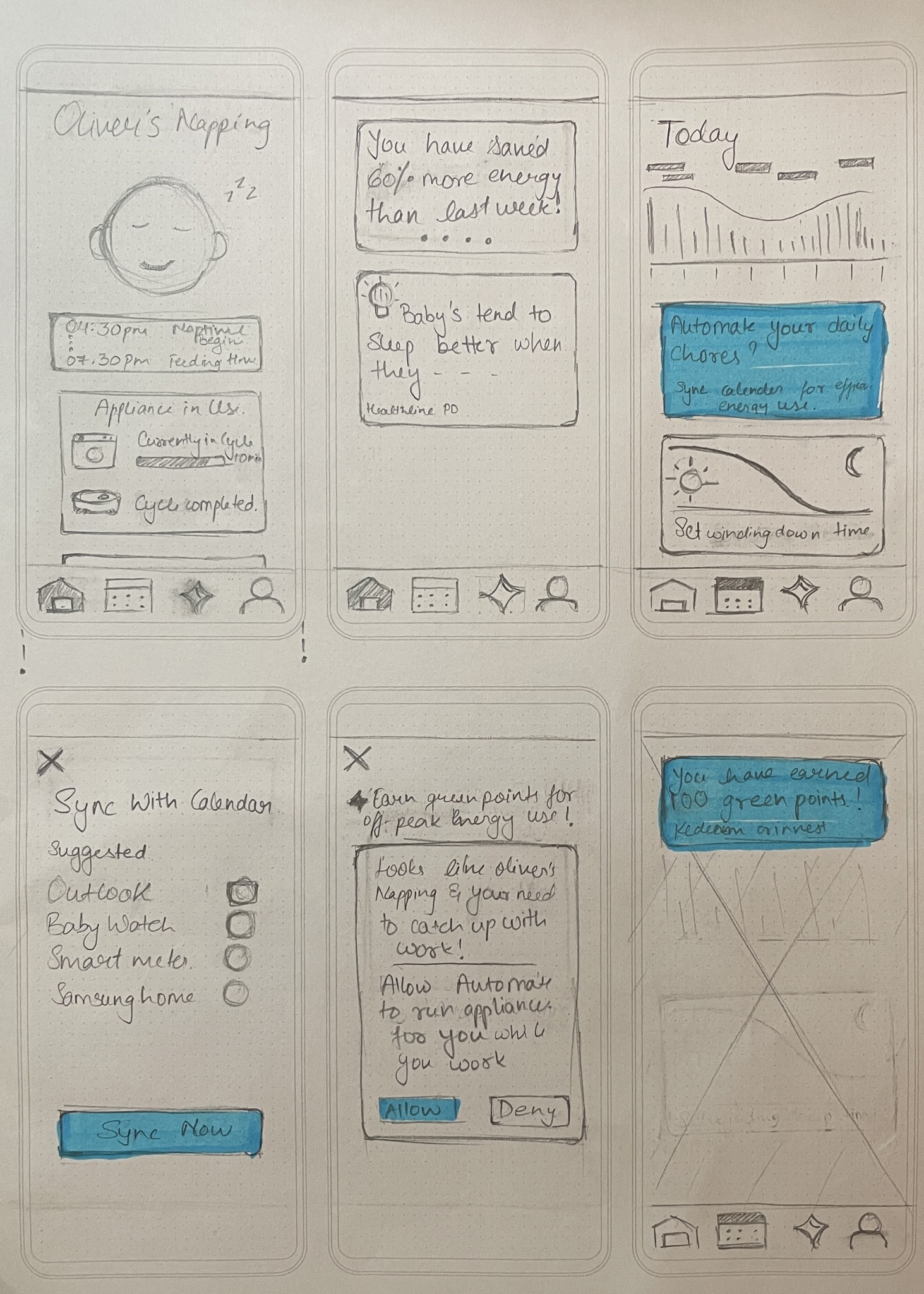
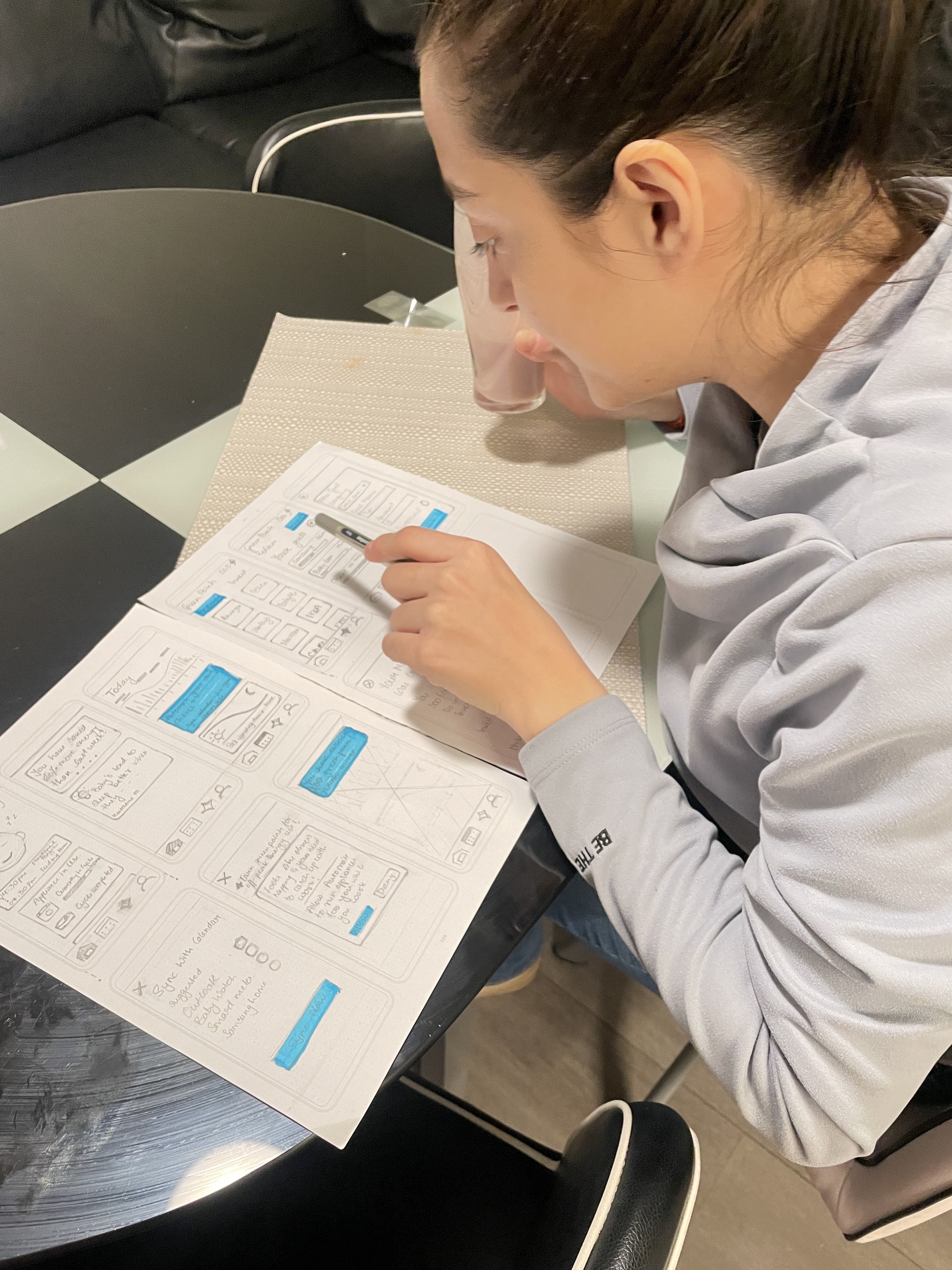
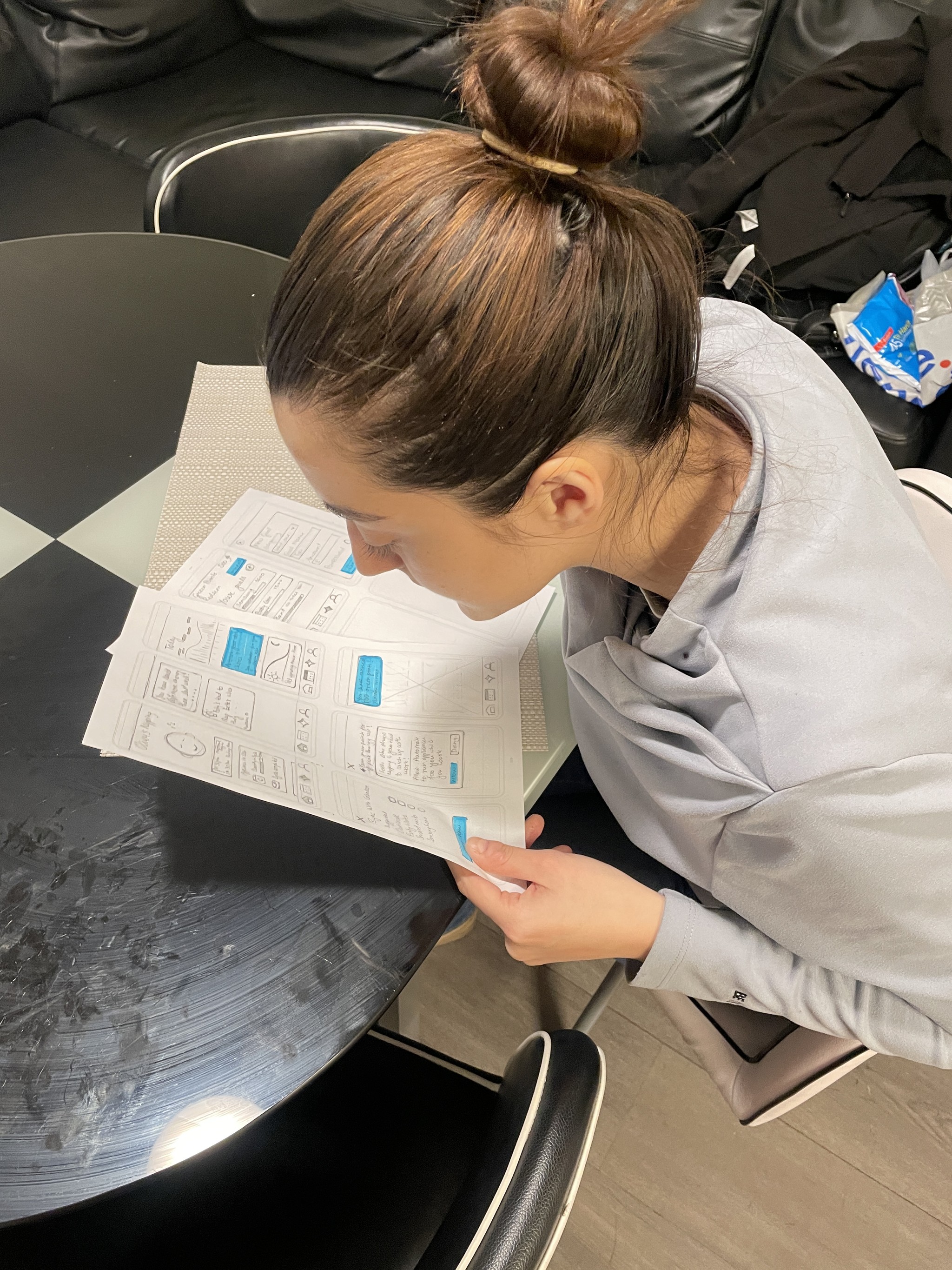
Lo-fi prototype testing
Through iterative testing, key insights emerged, shaping the refinement of several features.
Icon Recognition: Some category icons needed clearer visual representation to avoid misinterpretation.
User Flow Clarity: While most steps were intuitive, onboarding required a slight restructuring for better guidance.
Automation Usability: Users appreciated the concept but needed clearer instructions on setting up automated tasks.
Rewards & Investment: The "Redeem and Invest" section sparked interest, but users wanted more clarity on how investing points contributed to long-term savings.
Prototyping
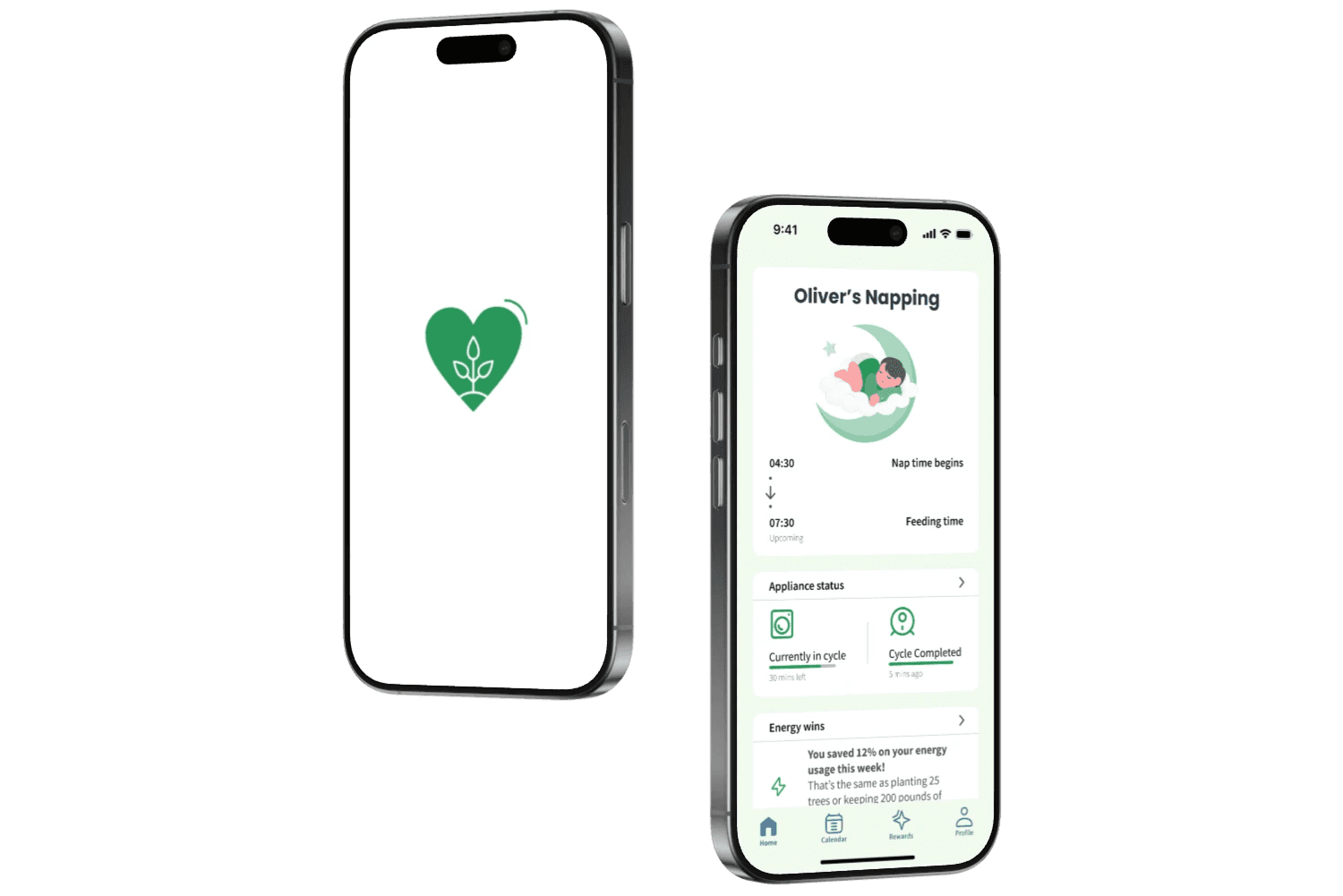
EcoBud - Home Page
Calendar - Organize Your Daily Tasks
Rewards - Redeem or Invest Your Points